


Watch
Also on our YouTube channel.
The Executive Hook
For decades, the Federal Reserve steered short-term interest rates by managing the quantity of reserves—buying and selling government securities daily so that a scarce supply of bank reserves intersected demand at the FOMC's target federal funds rate [1]. That limited-reserves corridor worked when balance sheets were small and every open-market operation moved the market.
The 2008 financial crisis broke the model. Large-scale asset purchases flooded the banking system with liquidity. Reserves rose from roughly $15 billion in 2007 to a peak near $2.7 trillion by late 2014 (measured) [1][4]. Adjusting reserve quantity no longer reliably moved the federal funds rate. The Fed pivoted to an ample-reserves floor system: it sets administered rates—primarily Interest on Reserve Balances (IORB) and secondarily the Overnight Reverse Repurchase Agreement (ON RRP) rate—and lets arbitrage pin the market rate inside the FOMC's target range [1][2][3].
Why this matters on a credit desk: In an ample-reserves regime, bank funding costs and deposit betas track administered floors more closely than pre-2008 corridor logic. That flows through net interest margin (NIM), liquidity coverage ratios (LCR), and the hurdle rates corporate borrowers and treasury teams use for working-capital and floating-rate debt. When IORB moves, commercial banks reprice assets and liabilities; when ON RRP competes with bank deposits, corporate cash managers face a different yield ladder than sweep accounts alone would suggest [2][3][7][14].
This memo is literal monetary mechanics applied to commercial banking and corporate finance—not metaphor. For the enterprise governance analogy (Ample Reserves applied to AI), see Governing the Agentic Horizon.
The Ample-Reserves Curve
Reserve abundance is the structural fact that redefines policy implementation. When reserves are ample, the supply curve is vertical—small OMO shifts do not change the price of liquidity. The Fed instead administers the price of reserves and extends that floor to nonbanks through ON RRP [1][4].
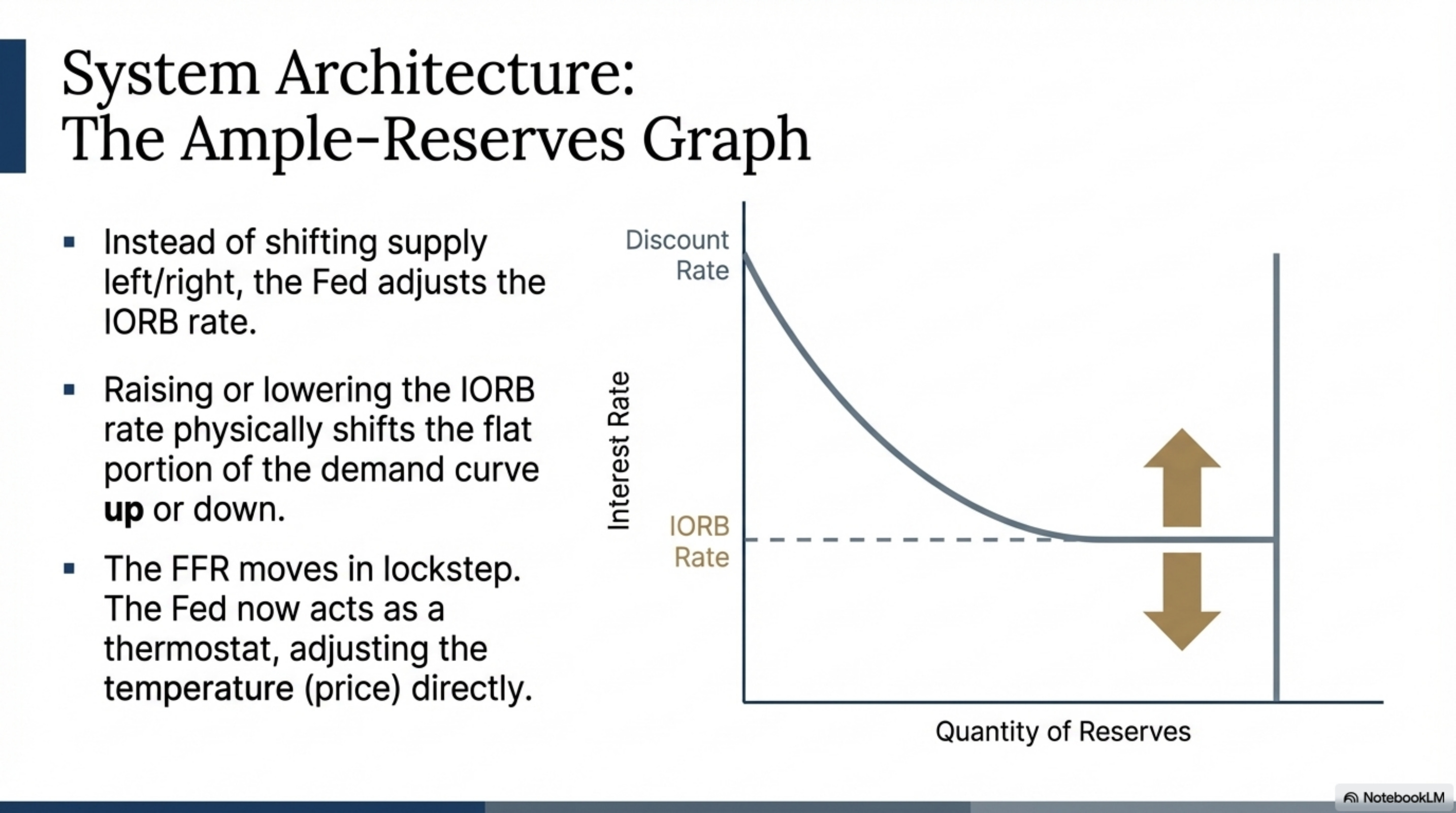
Figure 1: System architecture — ample-reserves graph
Schematic. In ample reserves, supply intersects the flat portion of demand; the Fed shifts IORB (administered rate) rather than reserve quantity. Numeric reserve timeline remains in the [verification pack](https://www.theaioperator.net/articles/fed-floor-system-ample-reserves) — not replotted here.
Regime: Limited (pre-2008) · Reserve state: Scarce · Primary control: Quantity via daily OMO · Impact on corporate lenders & credit spreads: Tight liquidity → wider interbank spreads; deposit rates lag policy; NIM volatile around corridor · Failure mode: Liquidity crunch; rate volatility
Regime: Transition (2008–2014) · Reserve state: Rising · Primary control: QE + legacy OMO · Impact on corporate lenders & credit spreads: Deposit inflows + low loan demand compress NIM; credit spreads reflect crisis tail risk · Failure mode: Corridor logic breaks down
Regime: Ample (2014–present) · Reserve state: Abundant · Primary control: Administered rates (IORB, ON RRP) · Impact on corporate lenders & credit spreads: IORB sets bank reservation yield; deposit betas rise with hikes; floating-rate corporates index to EFFR/SOFR; MMF/ON RRP competes with bank sweeps · Failure mode: Floor "leakiness" below IORB for nonbanks
The Deep Technical Lane
IORB as reservation rate
Interest on Reserve Balances (IORB) is the reservation rate for depository institutions: the minimum return a bank accepts before lending reserves in the federal funds market [2]. If a bank earns 4.40% risk-free at the Fed (illustrative — Jun 2026 snapshot), it will not lend at 4.00% [2][7]. IORB therefore sets a floor under the effective federal funds rate (EFFR) for banks with reserve accounts.
Chair Powell summarized the operating principle: the Fed sets two overnight administered rates and uses them to keep the market-determined federal funds rate within the FOMC target range [11].
ON RRP as compliance floor
Not every market participant can earn IORB. Money market funds (MMFs), government-sponsored enterprises, and other nonbanks lack reserve accounts—but they can participate in the Fed's ON RRP facility [3]. The ON RRP rate is a supplementary administered rate: institutions deposit cash overnight and receive Treasury collateral; the next day the transaction unwinds at the posted rate [3][6].
Because these institutions will not lend below what they can earn at ON RRP, the effective federal funds rate is unlikely to fall below the ON RRP rate [1][3]. ON RRP is the compliance floor that extends the floor system beyond banks.
Arbitrage dynamics
The floor system works through arbitrage, not daily micromanagement:
IORB sets the reservation rate for banks.
ON RRP extends a hard lower bound to nonbanks.
Discount window / Standing Repo Facility (SRF) act as ceiling backstops—though discount-window stigma limits the ceiling's binding force; the SRF (established 2021) provides a less stigmatized ceiling tool [9].
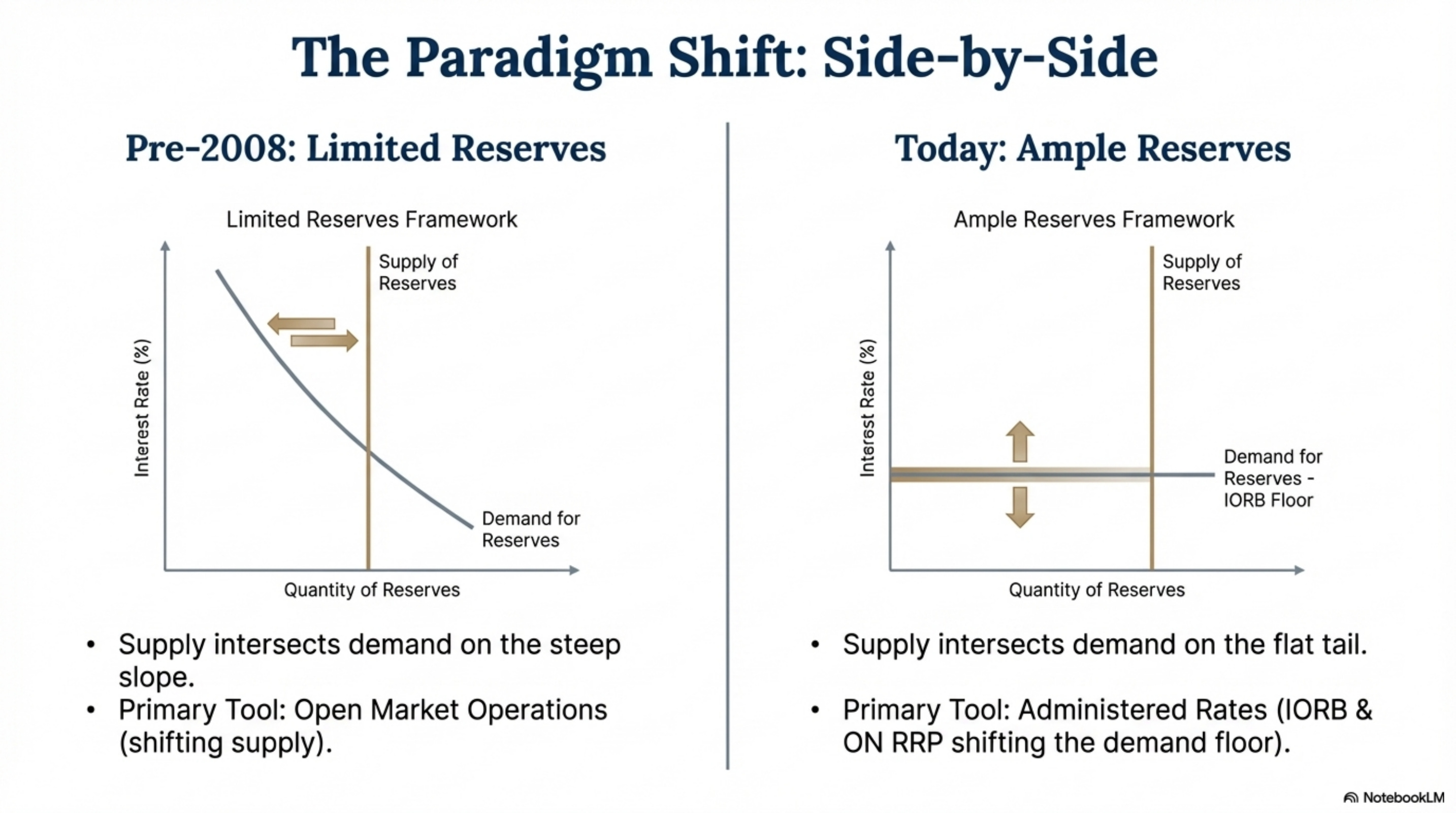
Figure 2: The paradigm shift — limited vs ample reserves
Side-by-side schematic : pre-2008 quantity management (OMO shifts supply) vs today's administered-rate floor (IORB & ON RRP shift demand). Prose statistics cite primary sources; diagrams are notebook-grounded, not matplotlib approximations.
Tool: IORB · Mechanism: Interest on reserve balances · Who it binds: Banks with Fed accounts · Policy role: Primary floor — reservation rate
Tool: ON RRP · Mechanism: Overnight reverse repo · Who it binds: MMFs, GSEs, etc. · Policy role: Supplementary floor — compliance rate
Tool: SRF · Mechanism: Standing repo · Who it binds: Dealers · Policy role: Ceiling backstop (non-stigmatized)
Tool: OMO (maintenance) · Mechanism: Reserve-adding purchases · Who it binds: System-wide · Policy role: Keeps reserves ample, not scarce
Reserve requirements were set to zero effective March 26, 2020—making required-reserve mechanics irrelevant in the ample framework [1][13]. Policy implementation discussions should center on IORB and ON RRP, with OMO as a maintenance tool [1].
Post-2020 context
After COVID liquidity injections, reserves stood above $3 trillion by April 2020 (measured) [1][4]. The subsequent hiking cycle (2022–2023) raised administered rates from near zero to above 5% while the floor architecture remained intact—the Fed continued to move IORB and ON RRP together, keeping the target range width at 25 basis points since December 2008 [1][7]. Quantitative tightening (balance sheet runoff from 2022) reduced reserves but did not revert to a scarce-reserves corridor [8].
Commercial Banking Lens (CBCA)
Credit analysts and commercial bankers should read the floor system as balance-sheet plumbing, not macro trivia.
Net interest margin (NIM)
NIM is the spread between what a bank earns on interest-bearing assets and what it pays on interest-bearing liabilities. In an ample-reserves world:
Asset yields on floating-rate loans and securities reprice with policy rates and spread over SOFR/EFFR benchmarks [7][14].
Deposit betas—how quickly deposit rates pass through FOMC hikes—often lag in early cycle phases, then catch up as IORB and money-market competition tighten [2].
IORB raises the reservation yield on excess reserves: banks with large Fed balances earn administered rates directly, which can support NIM when loan growth is slow, but also signals opportunity cost—capital deployed to reserves is not earning relationship lending spread.
When evaluating a commercial bank borrower, ask whether NIM expansion is structural (mix shift, pricing discipline) or transient (deposit beta lag that will compress margin when betas catch up).
LCR, NSFR, and HQLA
Basel III liquidity rules—implemented in the U.S. for large banks—frame how settlement balances and other assets count in stress scenarios [15][16]:
Metric: Liquidity Coverage Ratio (LCR) · CBCA definition (operator shorthand): Stock of high-quality liquid assets (HQLA) vs net cash outflows over 30 stress days · Tie to ample reserves: Reserve balances at the Fed are Level 1 HQLA (subject to caps in the ratio); abundant reserves improve short-term liquidity coverage when not trapped in illiquid assets
Metric: Net Stable Funding Ratio (NSFR) · CBCA definition (operator shorthand): Available stable funding vs required stable funding over one year · Tie to ample reserves: Large deposit bases and long-term debt count as stable funding; reserve accumulation must be funded—watch NSFR when banks grow Fed balances without matching stable liabilities
Metric: HQLA · CBCA definition (operator shorthand): Cash, central bank reserves, sovereign debt meeting haircuts · Tie to ample reserves: IORB-earning balances are the cleanest HQLA in USD—relevant when stress-testing a bank's liquidity stack
Credit analyst checklist — bank liquidity (ample reserves) 1. Reserve path: Plot settlement balances vs FRED WRESBAL trend—is the bank holding more Fed balances than peers without loan growth? [4] 2. Deposit beta: In the last hiking cycle, did interest expense rise faster than asset yields (NIM squeeze)? 3. HQLA mix: What share of liquid assets is reserves vs securities? Reserves are HQLA but earn only IORB—no spread. 4. Nonbank competition: Are corporate deposits migrating to MMFs using ON RRP? Deposit outflows stress LCR outflow assumptions. 5. Floating-rate book: What index (SOFR, prime, EFFR-based) drives repricing on the commercial loan portfolio? [7][14]
Corporate Treasury & Yield Analysis
Corporate cash managers do not earn IORB. Their yield ladder sits above or beside the ON RRP floor:
Placement: Bank sweep / operating account · Typical yield driver: Deposit rate (beta to policy); FDIC insurance limits · Credit / liquidity tradeoff: Convenience, payments rails; yield often below MMF after hikes
Placement: Government MMF → ON RRP · Typical yield driver: Near ON RRP rate via fund portfolio [3][6] · Credit / liquidity tradeoff: Daily liquidity; not a substitute for operating cash in all structures
Placement: Short-term commercial paper · Typical yield driver: Issuer spread + benchmark · Credit / liquidity tradeoff: Credit selection; less direct tie to Fed floor but competes on yield
The nonbank dilemma: When ON RRP is attractive, MMFs pull cash from bank balance sheets. That can raise bank funding costs (deposits reprice or leave), widening spreads on revolvers and working-capital lines for corporate borrowers. Treasury teams optimizing yield must document policy limits—operating vs strategic cash, counterparty limits, and whether MMF exposure fits investment policy.
FP&A and Credit Modeling Inputs
For corporate FP&A directors and commercial credit analysts building cash flow and debt schedules, the ample-reserves regime implies:
Floating-rate debt: Index to SOFR (secured overnight financing rate) or EFFR for USD exposures—not legacy LIBOR [14]. SOFR is the ARRC-recommended benchmark; EFFR remains the Fed's effective policy implementation rate [7].
Hurdle rates: Use EFFR or SOFR plus a liquidity and credit spread for short-term internal transfer pricing. Administered-rate moves (IORB/ON RRP) flow into these benchmarks within the target band [2][7].
Stress cases: Model parallel shifts in policy rates and deposit beta lag for bank clients; for corporates, stress revolver utilization when bank NIM compression tightens underwriting.
Illustrative modeling convention: all-in coupon ≈ SOFR + spread for syndicated floating-rate facilities; verify loan documents for fallback language and observation tenor (daily vs term SOFR).
Resource Callout
Presenter materials - Verification data pack: Excel workbook · reserve timeline CSV
The Monetary Quiz
Use these checkpoints in a treasury or credit staff meeting—answers grounded in [1][2][3][15]:
#: 1 · Question: Primary tool for moving the FFR within target in ample reserves? · Answer: IORB — not daily OMO
#: 2 · Question: Why does ON RRP exist if IORB already sets a floor? · Answer: Nonbanks cannot earn IORB; ON RRP extends the floor
#: 3 · Question: What HQLA treatment applies to Fed reserve balances in LCR? · Answer: Level 1 HQLA (with regulatory caps)
#: 4 · Question: What broke the pre-2008 corridor? · Answer: Reserve abundance from QE; quantity management lost traction
#: 5 · Question: Benchmark for new USD floating-rate corporate debt models? · Answer: SOFR (plus documented spread); EFFR for policy floor context [7][14]
Learn Next
Enterprise analogy: Governing the Agentic Horizon — Ample Reserves as an AI governance mental model (distinct from this literal Fed memo)
Capital allocation: The Reuse Ledger — FMVA-style workbook pattern for auditable operator models
Data policy: Download the verification pack and trace one reserve timeline row against FRED WRESBAL and EFFR against FRED FEDFUNDS [4][7]
Key Takeaways
The Fed shifted from quantity management to price administration (IORB/ON RRP) after 2008 [1].
IORB sets the bank reservation rate; ON RRP extends the floor to MMFs and other nonbanks [2][3].
NIM dynamics in this regime depend on deposit betas, IORB-earning reserve balances, and loan repricing against SOFR/EFFR [2][7][14].
LCR/NSFR: Fed reserve balances count as HQLA—connect ample reserves to bank liquidity ratios, not just macro charts [15][16].
Corporate treasurers face a yield ladder (sweeps vs MMF/ON RRP vs CP); credit analysts should trace deposit migration into funding cost and spread risk [3][6].
Reserve surges are measurable: ~$15B (2007) → ~$2.7T (2014 peak) → >$3T (April 2020) [1][4].
Reserve requirements at 0% since March 2020—policy runs on administered rates [13].
Illustrative operator-education analysis aligned to CFI CBCA liquidity and credit concepts. Not investment advice. Verify primary Fed, FRED, and regulatory sources.
References
Jane E. Ihrig and Scott A. Wolla, "The Fed's New Monetary Policy Tools," Federal Reserve Bank of St. Louis Page One Economics, Aug. 3, 2020. https://www.stlouisfed.org/publications/page-one-economics/2020/08/03/the-feds-new-monetary-policy-tools
Board of Governors of the Federal Reserve System, "Interest on Reserve Balances (IORB)." https://www.federalreserve.gov/monetarypolicy/iorb.htm
Federal Reserve Bank of New York, "Overnight Reverse Repurchase Agreement Operations." https://www.newyorkfed.org/markets/rrp_op_policies
FRED, WRESBAL — Reserve Balances with Federal Reserve Banks. https://fred.stlouisfed.org/series/WRESBAL
FRED, IOER — Interest on Excess Reserves (discontinued; merged to IORB). https://fred.stlouisfed.org/series/IOER
FRED, RRPONTSYD — Overnight Reverse Repurchase Agreements. https://fred.stlouisfed.org/series/RRPONTSYD
FRED, FEDFUNDS — Effective Federal Funds Rate. https://fred.stlouisfed.org/series/FEDFUNDS
Board of Governors of the Federal Reserve System, "Policy Normalization." https://www.federalreserve.gov/monetarypolicy/policy-normalization.htm
Federal Reserve Bank of New York, "Standing Repo Facility." https://www.newyorkfed.org/markets/domestic-market-operations/monetary-policy-implementation/standing-repo-facility
Board of Governors of the Federal Reserve System, "FOMC Statement on Longer-Run Goals and Monetary Policy Strategy." https://www.federalreserve.gov/monetarypolicy/files/FOMC_LongerRunGoals.pdf
Jerome Powell, "Data-Dependent Monetary Policy in an Evolving Economy," speech, Oct. 8, 2019. https://www.federalreserve.gov/newsevents/speech/powell20191008a.htm
Board of Governors, "Statement Regarding Monetary Policy Implementation and Balance Sheet Normalization," press release, Jan. 30, 2019. https://www.federalreserve.gov/newsevents/pressreleases/monetary20190130a.htm
Board of Governors of the Federal Reserve System, "Reserve Requirements." https://www.federalreserve.gov/monetarypolicy/reserve-requirements.htm
FRED, SOFR — Secured Overnight Financing Rate. https://fred.stlouisfed.org/series/SOFR
Board of Governors of the Federal Reserve System, "Liquidity Coverage Ratio (LCR)." https://www.federalreserve.gov/supervisionreg/liquidity-coverage-ratio.htm
Board of Governors of the Federal Reserve System, "Net Stable Funding Ratio (NSFR)." https://www.federalreserve.gov/supervisionreg/net-stable-funding-ratio.htm
Monday Morning Checklist
[ ] Download the verification workbook and confirm one reserve timeline row against FRED WRESBAL [4]
[ ] Pull latest FRED FEDFUNDS and FRED SOFR for floating-rate model inputs [7][14]
[ ] Run the credit analyst liquidity checklist (five items above) on one commercial bank borrower or treasury counterparty
[ ] Map your treasury team's reservation rate equivalent: minimum yield before deploying operating cash to MMFs or CP
[ ] Run the Monetary Quiz with credit or FP&A staff; add one NIM/deposit-beta question from your portfolio
[ ] Brief leadership: IORB/ON RRP drive bank funding floors and corporate hurdle rates in ample reserves—not daily OMO [1][2]
Editorial transparency. Essays at The AI Operator may use AI-assisted research, drafting, and editing tools under staff editorial review. Facts, figures, and recommendations are checked before publication; we correct the record when evidence changes. Questions: hello@theaioperator.net.
Published on [Substack](https://theaioperator.net/p/fed-floor-system-ample-reserves).