


Executive Summary
Operator Trilogy, Part 1 of 3: why prompting is a management capability—and how to ask for decision-grade output.
About the series. The Operator Trilogy gives leaders and operators a path from how to ask (Part 1: prompting for decision-grade output) to what changes when AI acts (Part 2: Generative AI → agentic AI) to running a system of agents (Part 3: governance, safety, scaling). Each part stands alone; reading all three in order builds the full arc.
Purpose. This article gives leaders a practical framework for getting real value from AI—not by buying a better model, but by getting better at how you ask. You will learn why prompting is a management capability (not a technical trick), how to prompt for decision-grade output, and what your organization must do to build that capability at scale. By the end, you will have a clear mental model, evidence that it works, and concrete steps to act on. Theme: how to ask—turning messy questions into structured conversations that produce decisions, not drafts. It is the first of a three-part series; the others examine what changes when AI acts (beyond Generative AI) and how to govern and scale those systems.
The problem. Most organizations are leaving value on the table—and some are actively hurting decision quality—because they treat AI as a tool that executes instructions instead of a partner that interprets them. The result: generic output that doesn't inform decisions, wasted rework, and competitors who do get good at prompting pulling ahead. Teams that prompt well see 30–40% gains; teams that don't get noise, rework, and sometimes worse decisions than if they'd never used AI at all. The gap is no longer theoretical. It's in your board deck, your strategy offsite, and your next performance review.
Artificial intelligence has moved from the periphery to the core of executive decision-making. Yet organizational performance with AI varies dramatically—not because of model access, but because of how leaders communicate with these systems. If that sounds like a soft skill, it is—and it's the one that separates teams that get real leverage from AI from those that get generic output. This article examines prompting as an emerging management capability, drawing on recent research, executive education frameworks, and real organizational examples. We distinguish prompt design (the craft of clear instruction) from prompt engineering (the discipline of systematic refinement and governance), and propose a five-dimensional framework for executive-grade prompting: intent, context, constraints, examples, and evaluation. The analysis reveals that prompting functions as both a productivity accelerator and a mirror of leadership clarity, with implications for training, governance, and competitive advantage in AI-enabled organizations.
The most effective executives in the AI era will not be the ones who "know AI" in the abstract, but the ones who can consistently turn a messy business question into a precise conversation with intelligent systems that produces decisions, not drafts. Prompting is emerging as that connective tissue: a management capability that links strategy, technology, and human judgment.
Consider the evidence. In a landmark field experiment conducted with Boston Consulting Group, consultants given access to GPT-4 completed 12% more tasks, worked 25% faster, and delivered output rated over 40% higher in quality compared to control groups. Yet the same study revealed a critical boundary: performance dropped sharply when consultants applied AI to tasks outside its "capability frontier"—the line between tasks AI handles well and those where it stumbles. The differentiator was not access to the model itself, but how people framed, constrained, and evaluated the work they assigned to it. In other words: your ability to get value from AI may depend more on how you ask than on which model you use.
Across industries, generative AI is now embedded in core workflows: drafting client proposals, exploring market entry scenarios, shaping transformation narratives, modeling financial outcomes, and automating routine analysis. Business schools and executive education providers are responding by positioning prompt engineering and AI-augmented decision-making as essential elements of modern leadership curricula. The message from both practice and academia is unambiguous: prompting has moved from experiment to expectation.
A Quiet Revolution in the C-Suite
The next sections answer three questions: why prompting matters for leaders, how it works as a strategic capability, and what organizations must do to build institutional literacy before competitors outpace them. If you take one thing from this part, it's this: AI doesn't execute your instructions—it interprets them. So the way you ask is the way you lead.
The integration of generative AI into management work represents a fundamental shift in how executives interact with technology. For decades, digital tools required users to learn the tool's language—menus, commands, syntax, and structured interfaces. AI reverses that relationship: now the tool learns your language. The upside is obvious: you don't need to learn menus or code. The catch? Plain language can be vague—and AI will reflect that vagueness back at you. Ignore that, and you get exactly what you'd expect: drafts that don't inform decisions, analysis that doesn't hold up under scrutiny, and a creeping sense that "AI doesn't really change anything." That's why ambiguity is the new challenge—and why learning to prompt well isn't optional.
AI systems are powerful but probabilistic—they deal in likelihoods, not fixed rules. They do not execute instructions like traditional software; they interpret them. The difference is subtle but profound:
A traditional tool executes predefined operations.
An AI system collaborates through iterative interpretation.
That's why interpretability matters in practice: understanding how the model is reading your request. The same words can be interpreted differently depending on context; being explicit reduces misinterpretation. This means leaders must learn to express intent with clarity, structure, and explicit constraints. In other words, prompting is not fundamentally a technical skill—it is a communication skill applied to a new kind of conversational partner.
Recent analysis of labor market data for "prompt engineer" job postings reveals that communication skills, creative problem-solving, and analytical thinking rank among the most frequently required competencies, ahead of formal project management or software engineering. This should capture the attention of any executive: the emerging role resembles strategic communication and product management more than coding.
Prompt Design vs. Prompt Engineering: A Critical Distinction
First, a distinction that shapes everything that follows. Organizations often conflate these terms, but leading advisory firms and academic researchers increasingly draw a line between the craft of writing effective prompts and the discipline of operationalizing them at scale.
Prompt design is the hands-on craft of writing clear, structured instructions that guide an AI model toward a desired output. It includes:
Defining the task and desired outcome
Setting constraints on format, tone, length, and scope
Specifying audience and context
Providing examples of high-quality outputs (few-shot learning—giving the model a few examples of what good looks like)
Clarifying evaluation criteria
Prompt design is to AI what effective writing is to email: the difference between noise and influence. It is a literacy skill that every manager can and should develop.
Prompt engineering represents the broader discipline of systematically refining, testing, and operationalizing prompts for reliability at organizational scale. It includes:
Iterative experimentation and A/B testing of prompt variations
Evaluation frameworks and quality metrics
Safety, bias, and compliance considerations
Integration with workflows, APIs, and enterprise tools
Versioning, documentation, and governance
Training and knowledge transfer across teams
Prompt engineering is the management and product-development layer that transforms individual prompting skill into institutional capability. Executives do not need to become engineers themselves, but they must understand this distinction to build the right teams, processes, and governance structures.
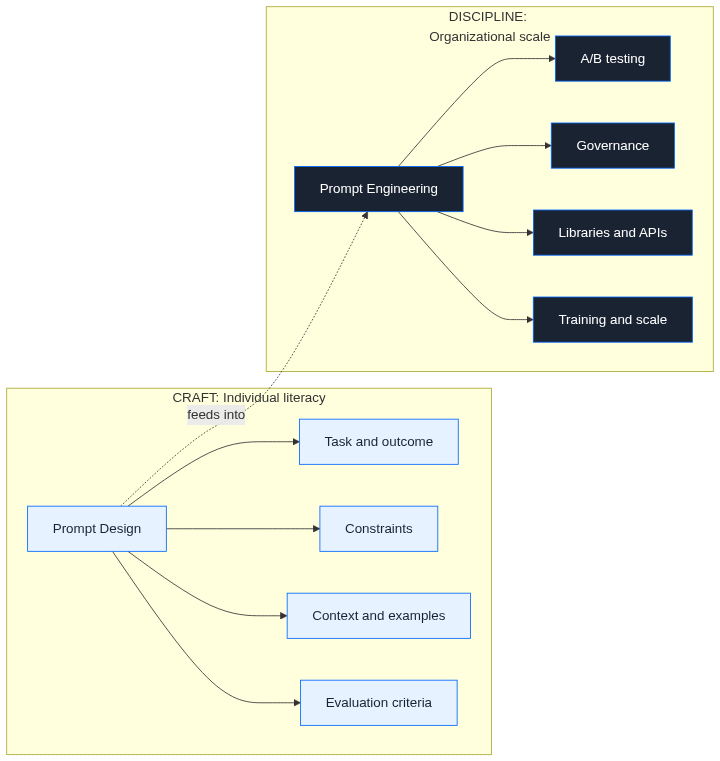
Figure 1: Prompt Design vs. Prompt Engineering
This figure distinguishes two levels of capability. On the left, prompt design is the craft of individual literacy: defining the task and outcome, setting constraints, specifying context and examples, and clarifying evaluation criteria. On the right, prompt engineering is the discipline of scaling that craft through A/B testing, governance, libraries, and training. Design feeds into engineering; organizations need both to build institutional capability.
Why Prompting Now Ranks as a Strategic Capability
So why does prompting deserve a place next to financial literacy and strategic communication? Purpose of this section: to show why—so you can make the case in your organization. The cost of getting this wrong is already visible: organizations that treat AI as plug-and-play are drowning in generic output and rework, while those that built prompt literacy are moving faster and getting better decisions. Four reasons prompting is the lever:
1. AI Amplifies the Quality of Executive Thinking
Generative AI has been empirically shown to "level up" performance on inside-the-frontier tasks such as idea generation, persuasive writing, and strategic analysis, particularly for less experienced professionals. A study of consultants using AI found that those in the bottom half of the performance distribution saw the largest gains, effectively narrowing the skill gap on well-defined tasks.
However, the model does not inherently know what constitutes "good strategy" for your company, market position, or competitive context. It amplifies the clarity—or confusion—of the instructions it receives. A vague prompt such as "Give me some ideas for our new product line" yields generic, unfocused output. A precise prompt that frames the target segment, business model constraints, success metrics, regulatory considerations, and strategic trade-offs can surface differentiated options that genuinely inform an executive decision.
Prompting is thus not about extracting clever outputs from a tool; it is about defining problem boundaries so that AI accelerates rather than corrodes decision quality.
2. Productivity Gains Depend on Prompt Quality
Field studies and organizational surveys suggest that knowledge workers using generative AI report time savings that translate into measurable productivity improvements. The Federal Reserve Bank of St. Louis estimates that current adoption patterns could contribute approximately 1.1% to overall productivity growth, with results varying a lot by task and skill level. Controlled experiments with management consultants show 30–40% performance improvements on well-scoped, AI-compatible analytical and creative tasks.
Yet the same body of research warns that applying AI outside its capability frontier—to ambiguous strategic problems, poorly specified objectives, or tasks requiring deep domain judgment—can reduce accuracy and increase the need for rework. Boston Consulting Group's research team found that consultants who used AI on outside-frontier tasks actually underperformed control groups, suggesting that inappropriate application of AI can destroy value. So the problem isn't "we're not using AI"—it's "we're using it in ways that look productive but aren't." Poor prompting doesn't just leave money on the table; it can make decisions worse.
3. Prompting Is the Universal Interface to AI Systems
From sales forecasting and customer service automation to software development and legal document drafting, the interaction model across enterprise AI applications is converging on natural language instructions. Whether that interface appears as a chat window, a voice-activated agent, or a system prompt embedded in a workflow, the underlying competency is the same: can your leaders and teams specify what they want in terms that map to real decisions and actions?
Leading business schools now describe "strong prompting" as a core leadership skill, comparable in strategic importance to financial literacy, data interpretation, or strategic communication. Executive education programs at institutions including Harvard Business School, MIT Sloan, and Emory's Goizueta Business School have introduced dedicated modules on AI-augmented decision-making and prompt engineering for senior leaders. In practical terms, prompting is becoming the new spreadsheet: the default interface through which managers influence how work gets done.
4. Prompting Democratizes Expertise—If Designed For It
When domain experts encode decision logic, analytical frameworks, quality checklists, and institutional heuristics into reusable prompts and workflows, they effectively create scalable knowledge assets. A well-designed prompt library allows a mid-level manager in a regional market to execute scenario analyses, risk assessments, or strategic reviews that once required specialized central teams.
Democratization only works when it's accompanied by training, governance frameworks, and clear guidance on when to trust, question, or override AI outputs. Prompting becomes not merely a way to extract value from AI, but a mechanism for propagating how the organization thinks, decides, and maintains quality standards.
The Five Dimensions of Executive-Grade Prompting
Purpose of this section: to give you a mental model you can apply in any situation—so you don't need a catalog of hundreds of prompt templates. One framework does the work: intent, context, constraints, examples, and evaluation. Get these five right, and your prompts move from "please help" to "here's the decision we need to make; here's the context; here's how we'll judge the answer."
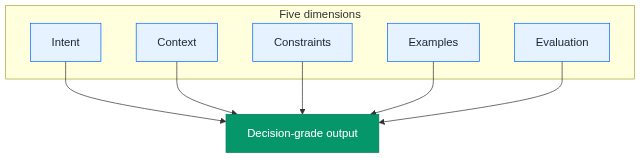
Figure 2: The Five Dimensions of Executive-Grade Prompting
This figure presents the five dimensions as a framework: intent, context, constraints, examples, and evaluation together feed decision-grade output. Each dimension narrows ambiguity; the sections below explain how to apply them in practice.
1. Intent: Start With the Decision, Not the Task
Most leaders instinctively describe work outputs—"Draft a board memo on our AI strategy" or "Summarize this market report"—rather than the decision context the output should support. Effective prompts invert this logic by articulating decision intent first.
Weak prompt: "Write a 2-page memo on AI strategy for the board."
Strong prompt: "Draft a 2-page board memo to help directors decide whether to approve a 3-year, $25M investment in enterprise AI capabilities. Compare two strategic options (build proprietary vs. partner with platform providers), highlight regulatory risks that will concern our audit committee, and propose a clear recommendation with supporting rationale."
The second prompt encodes strategic intent, stakeholder context, and decision criteria, making it dramatically easier to assess whether the AI's output is decision-useful.
2. Context: Give the Model the View From Your Chair
Research and practice both show that AI systems perform best when grounded in specific, relevant situational data and organizational constraints—that is, anchored in your context (your market, your constraints, your stakeholders) rather than generic assumptions. Yet executives often under-specify context because it feels "obvious" from their vantage point—while remaining opaque to the model.
Useful contextual elements for executive prompts include:
Market position, business model, and target customer segments
Time horizon and resource constraints (e.g., "next 18 months," "capital-light options only")
Stakeholder sensitivities and governance considerations (board dynamics, regulatory environment, employee concerns)
Strategic priorities and recent organizational history
In practice, powerful executive prompts read like a tight brief to a trusted senior advisor: concise but rich with what matters for the specific decision at hand.
3. Constraints: Turn Ambiguity Into Guardrails
AI systems generate outputs probabilistically, sampling from vast possibility spaces. Well-designed constraints reduce that space to the region most likely to yield valuable results. Studies of AI-assisted knowledge work demonstrate that when leaders define quality criteria, risk boundaries, and format requirements up front, teams use AI more effectively and require fewer post-hoc revisions.
Typical executive-level constraints include:
Format specifications ("3-slide executive summary with headline-driven structure")
Audience calibration ("For non-technical board members with finance and operations backgrounds")
Risk posture ("Highlight downside scenarios; assume we are risk-averse given regulatory scrutiny")
Analytical depth ("Focus on strategic implications, not tactical implementation details")
Constraints do not suffocate creativity or limit the value of AI assistance; they channel generative capacity toward organizationally relevant outputs. Occam's razor applies here: the simplest prompt that fully specifies intent, context, and constraints usually outperforms a long, vague one. Add clarity, not length.
4. Examples: Show, Don't Just Tell
Few-shot prompting—providing the AI with a small number of representative examples—is one of the most robust techniques for steering model behavior toward desired standards. In organizational settings, these examples can encode brand voice, analytical rigor, ethical standards, and quality expectations.
For instance, a global bank's risk function might provide an exemplar incident analysis report and instruct AI to reproduce that analytical structure, depth, and tone for new scenarios, ensuring consistency across regional teams and business units. Over time, these curated examples evolve into a living organizational library of "what good looks like" across different functions and decision types.
5. Evaluation: Decide How You'll Judge the Answer Before You Ask
The most subtle yet critical dimension of executive prompting is pre-specifying evaluation criteria. Research shows that people often over-trust AI outputs when they lack explicit quality benchmarks, even when AI performance deteriorates on tasks outside its capability frontier.
Executives can counter this risk by pre-committing to evaluation rules embedded directly in prompts, such as:
"For any strategic scenario, provide three distinct options with explicit trade-offs for each"
"Flag any assumption that would materially change the recommendation if it proved incorrect"
"Rate your own confidence level on a 1–5 scale and explain the key uncertainties"
"Identify which claims can be verified and which represent judgment or projection"
When you ask for confidence levels, flagged assumptions, or the line between fact and judgment, you're building explainability into the output—the ability to say why an answer is what it is. That makes outputs auditable and decision-ready. These evaluation criteria transform every AI interaction into a small governance mechanism, reducing the risk of uncritical acceptance while preserving the speed advantages of AI assistance.
From Individual Experimenters to Prompt-Literate Organizations
Purpose of this section: to show why individual experimenters aren't enough—and what does create lasting advantage. Isolated "power users" experimenting with AI tools will not generate sustainable competitive advantage. The problem: when only a few people know how to prompt well, the rest of the organization gets generic output, knowledge stays siloed, and when those power users leave, the capability leaves with them. Organizational capability emerges only when prompting is institutionalized through deliberate capability-building, governance, and knowledge management.
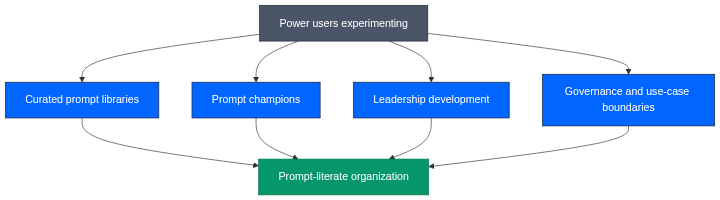
Figure 3: From Power Users to a Prompt-Literate Organization
This figure illustrates how individual experimenters become organizational capability. Power users are the starting point, but sustained advantage comes only when four levers work together: curated prompt libraries, prompt champions (e.g., 10–15% of the workforce), leadership development that embeds prompting, and governance around use cases and review. All four must feed the organization for prompt literacy to take hold.
Leading organizations are beginning to implement several key practices grounded in productivity field evidence [2][3][4] and prompt-as-capability framing [1]:
Build Curated Prompt Libraries. Central repositories capture high-performing prompts for recurring workflows—credit risk analysis, client outreach, supply chain scenario planning, regulatory reporting—along with documentation of context, limitations, and appropriate use cases. These libraries function as both training resources and quality standards, accelerating onboarding and ensuring consistency.
Train "Prompt Champions" Across Functions. Some firms aim for 10–15% of their workforce to serve as recognized experts who coach colleagues, maintain function-specific prompt libraries, and translate business needs into effective AI interactions. These champions bridge the gap between technical AI capabilities and domain expertise, serving as translators and quality advocates.
Embed Prompting in Leadership Development. Executive education programs now routinely include modules where senior leaders must use AI to solve realistic strategic problems—market entry decisions, organizational redesign scenarios, risk assessments—then reflect critically on how their prompting choices shaped outputs and decision quality. This experiential learning accelerates both skill development and mindset shifts about human-AI collaboration.
Establish Governance Around Prompts and AI Use. Boards and risk committees are beginning to ask not only "Which AI models do we use?" but "For which classes of decisions do we allow AI assistance, under what controls, and with which human review and sign-off requirements?" Prompt libraries, evaluation criteria, and use-case boundaries become governance artifacts that operationalize responsible AI principles [5][6].
The cumulative result is a new dimension of organizational culture: how people specify, test, and iterate requests to intelligent systems becomes as culturally important as how they run meetings, manage budgets, or make hiring decisions.
A Story: The Two Transformation Offsites
Why this story: same technology, different prompting—and different outcomes. To make that concrete, consider two CEOs leading large professional services firms into AI-enabled transformation.
At the first firm's strategy offsite, the CEO opens with ambition: "We're going to use AI everywhere to drive efficiency and innovation." Teams break into workshop sessions equipped with generic AI tools and blank chat interfaces. Prompts tend to read like casual questions: "How could we use AI in our operations function?" or "What are some AI use cases for client service?" Ideas pour in—hundreds of them—but they remain shallow, overlapping, and disconnected from clear strategic priorities or measurable business outcomes. Six months later, most pilot initiatives stall in what internal critics begin to call "innovation theater." The cost: months of effort, hundreds of ideas, and almost nothing that stuck. The prevailing narrative quietly shifts: "AI is intellectually interesting, but it doesn't fundamentally change our business model or economics." That's the problem, sold to you by your own team—not because AI failed, but because nobody gave them a way to ask that turned experiments into decisions.
At the second firm's offsite, the CEO frames the challenge differently: "In 18 months, I want us to reduce client onboarding cycle time by 30% while simultaneously improving compliance outcomes and client satisfaction scores. That's the strategic objective. Now let's use AI to help us figure out how." Each working team receives a structured prompting guide aligned with the five-dimensional framework: define intent (which business metric improves), specify context (current processes, regulatory constraints, client segments), articulate constraints (risk appetite, budget boundaries, change capacity), provide examples (previous successful process redesigns), and establish evaluation criteria (ROI thresholds, risk acceptability, implementation feasibility).
Teams use AI to map current workflows, identify friction points, simulate redesign options with different resource allocations, draft change management and communication plans, and generate risk registers. The outputs are not perfect, but they are concrete, grounded, and directly tied to the strategic objective. Within one year, the company launches targeted AI interventions in client onboarding and ongoing support functions, freeing up senior professionals to focus on higher-value advisory work and complex problem-solving—mirroring the capability-expansion effects documented in empirical studies.
The organizational story that takes hold is fundamentally different: "We're learning to think strategically with AI as a partner."
Same technology platforms. Different prompting capability. Dramatically different strategic outcomes. The lesson isn't that the second CEO had a better AI—it's that they gave their teams a better way to think about what to ask for.
Practical Steps: What Leaders Can Do Starting Monday
The central question for executives isn't "What is prompting?" but "What should I actually do next?" Below are five moves that turn this framework into action—each one builds on the last, and you can start with the first this week.
1. Reframe AI Conversations Around Decisions. Ask your leadership team and function heads to bring you not generic "AI use cases" or technology possibilities, but specific recurring decisions where better, faster, or more consistent reasoning would create measurable business value. Frame AI adoption as decision enhancement, not technology deployment.
2. Pilot a Five-Dimension Prompt Playbook in One Critical Workflow. Select a high-stakes recurring activity—quarterly business reviews, major account risk assessments, strategic planning cycles, M&A due diligence—and systematically document how effective prompts encode intent, context, constraints, examples, and evaluation criteria for that specific workflow. Measure quality improvements and cycle time reductions. Use the pilot as both a proof point and a training ground.
3. Identify and Empower Your Prompt Leaders. Identify individuals already experimenting effectively with AI tools and formalize their role as coaches, library stewards, and cross-functional knowledge brokers. Provide them with dedicated time, resources, and executive sponsorship. Recognize prompting excellence as a valued organizational competency.
4. Integrate Prompting Into Performance Management and Governance. Treat high-quality prompting as a learnable, assessable competency in performance reviews and development plans. Ensure that risk, compliance, and audit teams are centrally involved in defining use-case boundaries, quality standards, and escalation protocols. Make prompt libraries and evaluation frameworks governance artifacts, not just productivity tools.
5. Maintain Human-Centered Leadership. Research on AI and organizational performance consistently emphasizes that technology delivers its greatest benefits when leaders use efficiency gains to free up capacity for uniquely human work: nuanced judgment, empathetic stakeholder management, creative problem-solving, and cross-boundary collaboration. Prompting should amplify leadership effectiveness, not substitute for it.
The Deeper Insight: Prompting as a Mirror of Leadership Clarity
Purpose of this section: one insight that ties everything together—prompting doesn't just get better output from AI; it reflects how clearly you think. There is a final, more personal insight. Research suggests that generative AI disproportionately benefits individuals who can clearly articulate problems, specify constraints, and define success criteria up front. The technology also tends to narrow performance gaps by enabling less experienced workers to produce higher-quality outputs on structured tasks.
In this sense, prompting functions as a mirror: it reflects the leader's own clarity of strategic thought, awareness of hidden assumptions, willingness to make trade-offs explicit, and commitment to disciplined evaluation. Leaders who struggle to articulate what they actually want from their teams will struggle equally to extract value from AI systems. Conversely, leaders who have cultivated the discipline of clear thinking, precise communication, and explicit decision criteria will find AI to be a natural amplifier of their existing capabilities.
The executives who thrive in the AI era will treat prompting not as a technical trick for generating better outputs, but as a reflective practice for developing better thinking—about strategy, about risk, about value creation, and about the implicit assumptions that shape organizational decisions. They will use conversations with AI as opportunities to sharpen their own questions, expose unstated premises, surface cognitive biases, and invite more diverse strategic options into executive deliberations. That's the mirror: the clearer you are, the more AI helps; the fuzzier you are, the more it amplifies the fuzz.
Conclusion: Prompting as the Connective Tissue of AI-Enabled Leadership
What we set out to do: give you a framework for getting real value from AI. Where we land: prompting is the connective tissue—the capability that links strategy, technology, and human judgment. Artificial intelligence is not coming to reshape management—it is already here, embedded in the daily workflows of strategy, operations, risk management, and innovation. The leaders who will outperform their peers are not those who "understand AI" in some abstract technical sense, but those who have mastered the discipline of prompting: the ability to translate messy strategic questions into structured conversations with intelligent systems that reliably produce decision-grade outputs.
Prompting is emerging as a fundamental management capability, comparable in strategic importance to financial literacy, data fluency, and effective communication. It is both a productivity accelerator and a governance mechanism. It democratizes expertise while also exposing gaps in leadership clarity. And critically, it represents a learnable capability that can be scaled across the organization—and that creates competitive advantage when embedded in culture, training, and decision processes.
Organizations that invest in building prompt literacy today—through structured frameworks, curated libraries, formal training, governance integration, and cultural reinforcement—will outperform those that treat AI as a plug-and-play technology requiring no new capabilities. The flip side: organizations that skip this will watch their best people get generic help, their strategies get generic advice, and their competitors—who did build the capability—get decision-grade output and move faster. The next parts of this series examine what changes when AI acts and how to run a system of agents with governance and human-centric design. The future belongs to leaders who can think with precision, communicate with clarity, and collaborate effectively with both human and artificial intelligence.
One question to take away: "For the decisions that matter most to us, do we know how to prompt for them—and have we built the culture and governance to do it well?" If that question lands, you've understood why prompting has purpose: it's not about using AI more, but about using it with intention so that your strategy, your people, and your quality standards show up in every conversation your organization has with intelligent systems.
In the AI era, that may be the most valuable management capability of all.
References
McKinsey & Company. (2024). What is prompt engineering? McKinsey Explainers. https://www.mckinsey.com/featured-insights/mckinsey-explainers/what-is-prompt-engineering
Dell'Acqua, F., et al. (2023). Navigating the Jagged Technological Frontier (BCG / HBS field experiment on GenAI and knowledge work). https://www.hbs.edu/ris/Publication%20Files/24-013_d9b45b68-9e74-42d6-a1c6-c72fb70c7282.pdf
Noy, S., & Zhang, W. (2023). Experimental evidence on the productivity effects of generative artificial intelligence. Science. https://www.science.org/doi/10.1126/science.adh2586
Boston Consulting Group. (2023). How people can create—and destroy—value with generative AI (BCG/HBS study coverage). https://www.bcg.com/publications/2023/how-people-create-and-destroy-value-with-gen-ai
National Institute of Standards and Technology. (2023). Artificial Intelligence Risk Management Framework (AI RMF 1.0). https://www.nist.gov/itl/ai-risk-management-framework
Anthropic. (2024). Building effective agents. https://www.anthropic.com/research/building-effective-agents
Federal Reserve Bank of St. Louis. On the Economy — generative AI and productivity commentary. https://www.stlouisfed.org/on-the-economy
Harvard Business Review. How AI Will Change Strategy and Leadership (HBR topic archive). https://hbr.org/topic/subject/ai-and-machine-learning
International Monetary Fund. (2024). Gen-AI: Artificial Intelligence and the Future of Work. https://www.imf.org/en/Publications/Staff-Discussion-Notes/Issues/2024/01/14/Gen-AI-Artificial-Intelligence-and-the-Future-of-Work-542379
Learn Next
Editorial transparency. Essays at The AI Operator may use AI-assisted research, drafting, and editing tools under staff editorial review. Facts, figures, and recommendations are checked before publication; we correct the record when evidence changes. Questions: hello@theaioperator.net.
Published on [Substack](https://theaioperator2.substack.com/p/think-like-ai-operator).