

The Opening Scene
You have probably felt this already: AI cleared your inbox, summarized the meeting, and drafted the doc—and you still did not ship on time. Worse, you may be carrying more work than before, not less.
In the age of AI, it often feels like everyone is taking on more projects at once. Assistants make it easier to start the next thing before the last one is done. Harold described the same pattern on many engineering teams: coordination got lighter, so people stretched across more work—managers routinely overseeing three or four large initiatives, engineers running multiple AI sessions in parallel. The capacity to begin scaled up. The capacity to verify did not.
That is the puzzle we brought to Operator Chats in a forty-five-minute live session with Chuanhao (Harold) Jin. Within ten minutes, the talk stopped sounding like generic career advice and started sounding like something you could use Monday morning.
Harold described experiences many of us have had. Coordination got easier. People had more room to work independently. And yet delivery still bogged down—on hard problems like scaling systems, knowing the domain deeply, and trusting whether an AI-generated answer would hold up in the real world.
The bottleneck had moved. Not gone—moved.
It moved from coordination to judgment under load: architecture decisions, infrastructure constraints, and verifying whether AI output will hold in production. The specific takeaway Harold left us with is operational, not philosophical—treat review capacity and system depth as the scarce resources, not meeting time or first drafts. If your team still ships no faster after AI cleaned the chat and the docs, that is not a tooling failure. It is a signal that the hard work was never the inbox.
The line that stuck: AI is not removing the need for human judgment. It is moving where that judgment has to live.
That led to one question we kept returning to: Now that AI handles the busywork, where does your team actually get stuck?
We structured the conversation around five prompts—not a loose interview. Each prompt had a plain job: name the friction, hear how Harold thinks operators should handle it, and leave with something you can try this week.
You do not need to work at a cloud company to use this. Any team that produces more AI output than it can comfortably review will recognize the pattern.
About the guest
Chuanhao (Harold) Jin is a senior software engineer and MBA candidate at the Gies College of Business, University of Illinois Urbana-Champaign. He has spent more than thirteen years building large-scale systems across enterprise and cloud environments and serves on the Harvard Business Review Advisory Council. His work sits at the intersection of deep engineering practice and the organizational questions AI is forcing every team to answer. LinkedIn
Views expressed in this conversation are Harold’s own and do not represent the views of any employer or company, including Amazon Web Services (AWS).
The Operator Framework: Five Conversational Turns
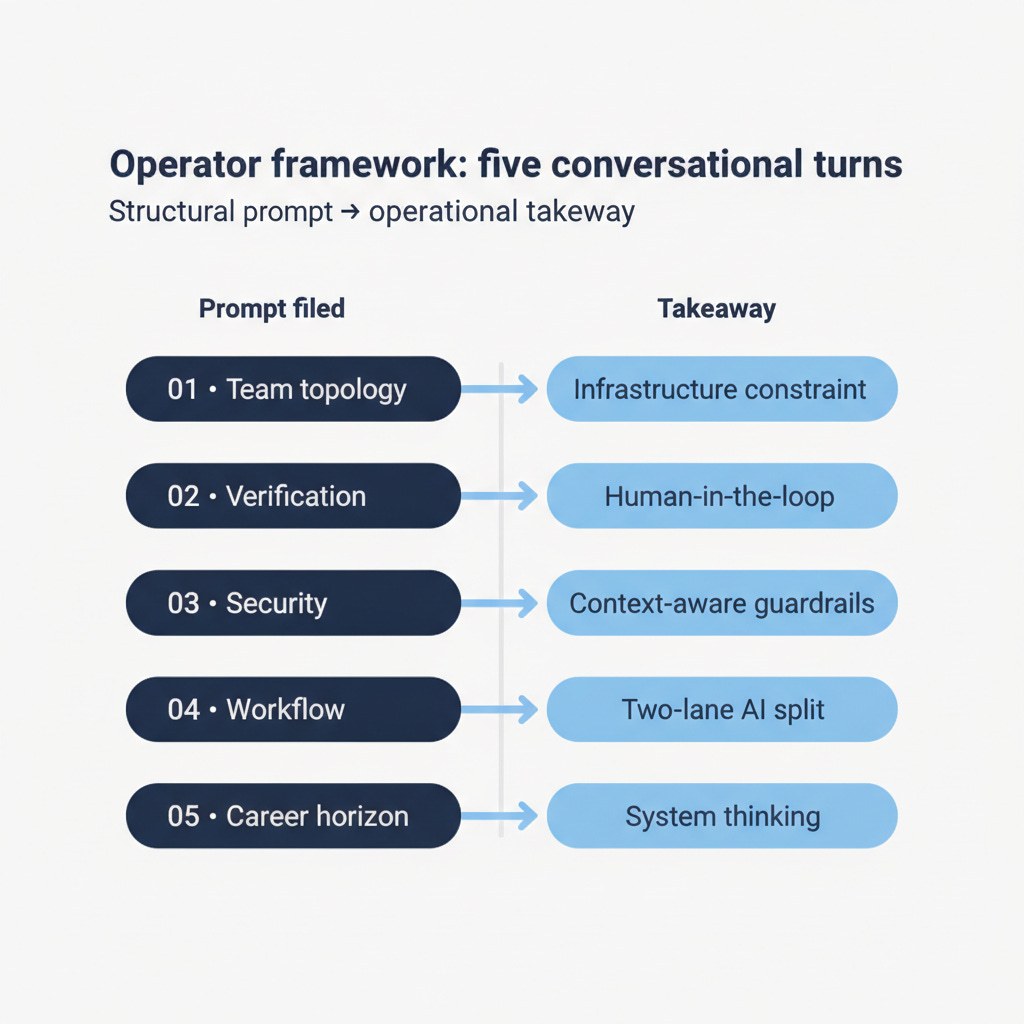
Figure 1: Five themes from the session — what shifted, and what to do next
Turn: 01 · Theme: Team coordination · What shifted: AI fixed meetings; depth still blocks shipping · What to do Monday: Audit where time actually goes
Turn: 02 · Theme: Quality checks · What shifted: More projects in flight; judgment did not scale · What to do Monday: Tier your review checkpoints
Turn: 03 · Theme: Security · What shifted: Rule-based tools miss context · What to do Monday: Add context-aware code review
Turn: 04 · Theme: Tool policy · What shifted: Work tools vs. private tools · What to do Monday: Write a two-lane AI policy
Turn: 05 · Theme: Career and org design · What shifted: Execution moves to AI assistants · What to do Monday: Invest in system design and impact
01 — The Infrastructure Bottleneck
The question we asked: If AI already handles status updates, handoffs, and documentation, what still slows delivery down—and what skills become non-negotiable?
You might recognize this if… your standups are shorter but releases are not faster.
Harold described a familiar setup: a standard two-pizza team made up of engineers, managers, and program managers. Levels on those teams are contingent on team maturity and needs. Hiring still prioritizes experienced contributors when teams face turnover, and interview processes increasingly watch for cheating without necessarily lowering the bar.
What changed is where people spend their days. Less time chasing context in chat. More time on problems that do not have a template: scaling, deep domain knowledge, and asking whether a generated fix will survive production traffic.
Think of it like cleaning your desk so you can finally see the hard project you have been avoiding. AI cleaned the desk. The project is still hard.
Your takeaway: Run a one-week audit. List what still blocks delivery after communication and drafting improved. Harold’s bet: most items will be architecture, infrastructure, and verification—not another messaging tool.
Next up: Once coordination is easier, someone still has to answer is this right? before it ships.
02 — The Verification Problem
The question we asked: What can AI draft on its own, and what needs a named person to approve before it goes live?
You might recognize this if… you have more drafts than you have time to read—or more active projects than you did a year ago.
Harold was blunt about the new normal: in the age of AI, people are taking on more projects because the busywork feels manageable. Managers often run three or four large initiatives at once. Individual contributors bounce between multiple AI-assisted workstreams in a single day. AI can produce code, summaries, and plans in bulk across all of them. Before any of it ships, someone still has to ask the question that actually matters—is this correct?
That is the hidden tax. AI did not shrink the workload for most senior people. It widened it. You can staff more parallel bets when drafting and coordination are cheap—but every bet still needs a human who understands the system well enough to catch a wrong answer.
Many large tech interviews still split time between technical tests and judgment or leadership conversations [2]. The message is consistent: skill plus judgment, not skill alone.
On timing, Harold put meaningful reduction of human oversight five to ten years out [1]—not next quarter. Until AI is more predictable and less likely to sound right while being wrong, quality depends on people who catch mistakes quickly.
Your takeaway: Treat review like capacity planning. Write three tiers: what can move with light review, what gets a spot-check, what never ships without a named owner. More output without more judgment is just faster risk.
Next up: Review catches mistakes—but what stops bad changes before they reach production?
03 — The Security Architecture Problem
The question we asked: What should catch risky changes automatically—and when does a person still need to step in?
You might recognize this if… your automated checks pass but you still do not trust the merge.
Harold described a shift many teams are exploring: AI that watches proposed code changes and flags bad ones, alongside familiar checkers for types and style. The gap is context—whether the change fits this codebase, this team’s history, and how much harm it could cause if it is wrong.
That rhymes with Operator Chats Edition 01 [3]: “ban AI” and “use AI for everything” both fail. You need tiers—automation for volume, humans for ambiguity and high stakes.
Your takeaway: Check two things on your guardrails: do they run on every change, and do they explain why something is risky here—not just that a rule failed?
Next up: Security is not only about code. It is also about which AI tools people are allowed to use for work.
04 — The Workflow Split
The question we asked: How do you separate employer-approved AI for work from private AI for sensitive data?
You might recognize this if… you use one tool for work slides and another for personal notes—and you are not sure what the policy actually says.
At work, Harold said, the stack is often chosen for you. Large employers typically require approved AI vendors for work output [4]. For sensitive or personal material, he prefers running AI locally on his own machine so data does not leave it.
Day to day looks different now: several AI sessions open at once, often tied to different projects, switching between what the assistant can handle and what needs a human call. Harold said this is part of why the job feels busier even when the typing is easier—the work is more parallel, not more finished. The valuable skill is running the workflow across all of it—not typing every line yourself.
Your takeaway: Write a two-lane policy your team can repeat without guessing. Lane A: approved tools for work output. Lane B: private or local tools for passwords, personal data, unreleased plans, or personal learning. Gray areas become security incidents and people quietly using tools IT never approved.
Next up: Tool rules set the guardrails. Career strategy decides who thrives inside them.
05 — The System Thinking Horizon
The question we asked: As AI takes on more execution, where should you invest your time—and what does “good work” look like in your career?
You might recognize this if… your job title is the same but your Tuesday looks nothing like it did two years ago.
Harold’s advice was grounded, not motivational. Entry-level hiring may tighten as assistants handle simpler tasks. Depth at the mid and senior levels matters more. So do people skills—helping others use the tools, not hoarding tricks yourself.
He suggested splitting growth evenly: half on technical depth in the systems your industry actually runs, half on automating repetitive work through scripts and workflows.
System thinking here means designing how work flows—not only doing the next task. Let assistants handle pieces you used to do by hand; own the system that makes the output correct. Harold compared AI to electricity: it changes how products get built and secured, not just one feature on the roadmap [1].
Pressure on traditional middle management may grow as organizations get more done with AI assistants instead of layers of coordinators. Credentials still open doors; adaptability keeps them open.
Your takeaway: For your next quarter, pick three workflows you will own end to end—not three courses. For each, define what goes in, who signs off, and one metric (speed, cost, errors, time-to-ship).
The Core Pattern: Faster Busywork, Same Hard Judgment
Step back from the five themes and one pattern shows up everywhere.
We started talking about how engineering teams operate. We ended somewhere more familiar: AI creates volume in every function—and often more projects in flight per person. Marketing runs more campaigns in draft. Finance spins more models. Engineering staffs more parallel bets. The question is no longer can we produce this? It is can we trust it before it goes out the door—and do we have enough judgment to cover everything we started?
Harold illustrated the squeeze clearly. AI made it feasible to coordinate more work at once. It did not add more hours in the day for review. Coordination busywork was never the only bottleneck—it was just the loudest one. Once AI handles messages and first drafts, what remains is depth across a wider portfolio: does this fit the system, is this change safe, is this workflow sound?
That is a people problem as much as a tech problem. Every team has early adopters, careful reviewers, skeptics, and people waiting for permission. The goal is not to remove humans from the loop. It is to stop wasting human attention on work that never needed a senior person in the first place.
What changes Monday morning
Run the one-week blocker audit. See what still slows you down after AI improved communication and drafting.
Count parallel projects honestly. If you or your reports are on three or four major initiatives, assume review capacity—not drafting speed—is the constraint.
Write three review tiers. Light review, spot-check, named approver—publish the list so nobody improvises.
Document a two-lane AI policy. Approved tools for work; private or local tools for sensitive data.
Pick one impact metric per workflow. Cost, errors, time-to-ship—activity counts are not enough.
The teams that win are not the ones with the most AI subscriptions. They are the ones that know where humans still matter—and build for that on purpose.
References
Chuanhao (Harold) Jin, Operator Chats live session (July 11, 2026). Guest field notes on enterprise engineering, verification timelines, and career strategy. Personal views only.
Amazon. (2026). Leadership Principles. Amazon Jobs. https://www.amazon.jobs/content/en/our-workplace/leadership-principles
The AI Operator, with Professor Nathan Yang. (2026). Business Education Is Becoming an AI Operating System. Operator Chats Edition 01; tiered governance and human judgment at scale.
Anthropic. (2026). Enterprise partnerships and Claude for business. https://www.anthropic.com/enterprise
The AI Operator. (2026). Human-on-the-Loop Runbook. Operator escalation patterns for AI-assisted workflows.
The AI Operator. (2026). Operator Chats program overview. https://www.theaioperator.net
About Operator Chats
Operator Chats is a monthly live conversation series from The AI Operator. We sit down with builders and operators—including guests like Chuanhao (Harold) Jin—and unpack how AI is changing strategy, workflows, and how teams actually work.
Catch the next drop: Subscribe to The AI Operator on LinkedIn for monthly field notes and deep dives.
Engage: Join the conversation on our LinkedIn channel. Where has your team’s bottleneck moved since you adopted AI?
Transparency note: This editorial deep dive is compiled from the live Operator Chats session with Chuanhao (Harold) Jin (approximately forty-five minutes, July 11, 2026). The content has been organized, expanded, and structured for editorial depth and readability. Conceptual takeaways and framework interpretations reflect the operational views of The AI Operator. Views attributed to the guest are his personal opinions and do not represent any employer or company, including Amazon Web Services (AWS).
Editorial transparency. Essays at The AI Operator may use AI-assisted research, drafting, and editing tools under staff editorial review. Facts, figures, and recommendations are checked before publication; we correct the record when evidence changes. Questions: hello@theaioperator.net.
Published on [Substack](https://theaioperator2.substack.com/p/engineering-bottleneck-infrastructure-ai).