

Executive Summary
Who this is for: Platform engineering leads, agent architects, and FinOps partners pricing MCP and tool-catalog sprawl before inference spend dominates.
Week two of the agent pilot, Maya Chen, platform lead, approves server #12 because the demo ships Friday. Jordan Hale, finance partner, asks what it costs to own—not in tokens, in integration hours. Maya has no number. Dana Okonkwo, security, finds three servers wrapping the same CRM with different auth paths. The demo wins the sprint; the catalog loses the quarter.
Composite operators / illustrative scene — not one customer's books.
Model Context Protocol (MCP) and similar tool standards lower the demo cost of agentic systems—and raise the integration cost of production ones. Every new server adds API surface area: auth, schema contracts, observability, and security review. This playbook prices that debt using published survey and repository-mining data, not composite anecdotes.
Three research streams define the tax base:
API labor (Postman, 2025): 69% of developers spend 10 or more hours per week on API-related work; 93% of API teams report collaboration blockers; only 17% adopt contract testing despite 67% doing functional/integration tests [1].
Agent shipping failure (AIDev, MSR ’26): 46.41% of agent-generated fix PRs are rejected; rejected work shows median code churn of 81–293 lines [2].
Shadow tool sprawl (industry surveys): Gartner reports 158+ shadow AI tools in active use at the average enterprise [3]; 80% of employees use unauthorized AI tools per UpGuard’s 2025 employee survey (n=1,020 US/UK) [4].
MCP servers sit at the intersection: sanctioned API endpoints that agents call in production—each one inherits the Postman integration tax plus agent rejection economics when schemas drift.
Cross-domain lens: API gateways taught enterprises that integration surface compounds. MCP toolchains repeat the pattern with faster onboarding and weaker default governance.
The Argument
Teams that count tokens but not integration hours reproduce the microservices tax in a thinner layer. This playbook complements Shadow AI Inventory (discover-to-govern unsanctioned tools), the Operator Trilogy, and agentic security. Shadow inventory names rogue endpoints; the MCP Tax prices sanctioned servers before they multiply using the evidence table below.
Research baseline
Source: Postman State of the API (2025) · Sample / scope: Global developer survey · Finding: 69% spend ≥10 hrs/week on API work; 11% spend >20 hrs/week · MCP Tax read: Integration is already a full workday slice
Source: Postman (2025) · Sample / scope: Same survey · Finding: 93% of API teams report collaboration blockers · MCP Tax read: Each MCP server adds another doc/schema silo
Source: Postman (2025) · Sample / scope: Same survey · Finding: 17% contract testing vs 67% functional/integration testing · MCP Tax read: Agents need contracts; most teams skip them
Source: Postman (2025) · Sample / scope: Same survey · Finding: 31% of organizations use multiple API gateways · MCP Tax read: MCP multiplies gateway-style sprawl
Source: Postman (2025) · Sample / scope: Same survey · Finding: 65% of organizations generate revenue from APIs · MCP Tax read: Integration quality is P&L-relevant
Source: AIDev / MSR ’26 · Sample / scope: 3,225 agent fix PRs · Finding: 46.41% rejection rate · MCP Tax read: Tool + agent errors burn review capacity
Source: AIDev / MSR ’26 · Sample / scope: 306 rejected PR sample · Finding: CI failure 6.9% of labeled rejections; provider failure 7.5% · MCP Tax read: Schema/CI gates are not optional
Source: Instructions-as-Code (2026) · Sample / scope: 15,549 PRs · 148 projects · Finding: 27.7% ↑ merge rate ≥20% after instruction files; 26.35% ↓ ≥20% · MCP Tax read: README ≠ production hardening
Source: UpGuard (2025) · Sample / scope: 1,020 employees US/UK · Finding: 80% use unauthorized AI tools · MCP Tax read: Shadow MCP mirrors shadow AI
Source: Gartner (2025) · Sample / scope: AI governance survey · Finding: 158+ shadow AI tools per average enterprise · MCP Tax read: Catalog or drown in endpoints
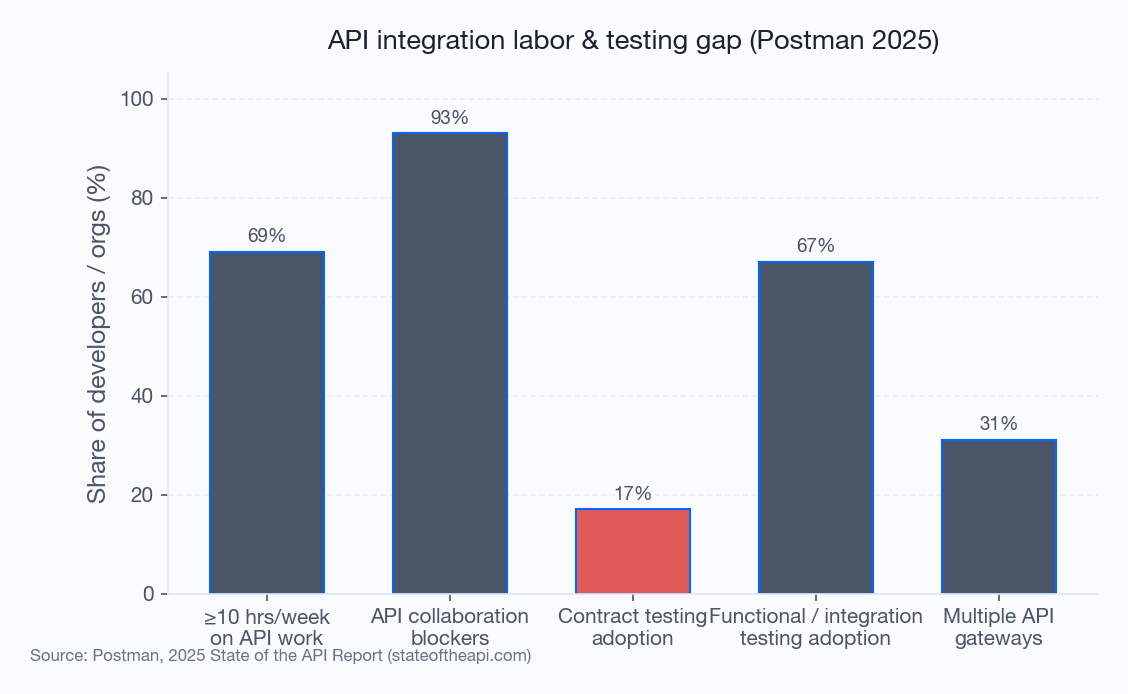
Figure 1: Where API integration time goes—and where contract testing lags
Sourced from Postman State of the API 2025 (stateoftheapi.com).
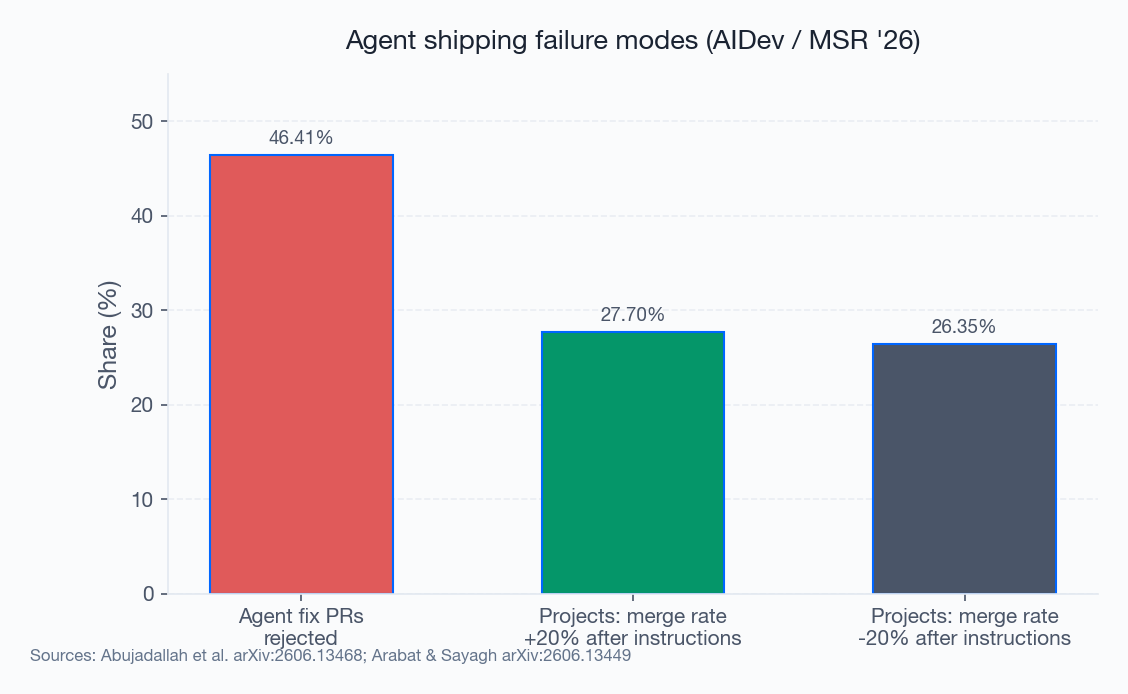
Figure 2: Production failure modes when tool guidance outpaces governance
AIDev rejection rate (Abujadallah et al., 2026) vs Instructions-as-Code merge-rate split (Arabat & Sayagh, 2026).
The MCP Tax Model
Price each MCP server against observed industry baselines, not invented hour buckets:
Labor anchor: If 69% of developers already spend ≥10 hours/week on API work (Postman, 2025), each net-new MCP server competes for that fixed pool—or expands it. Platform leaders should log incremental hours per server (auth, schema, observability, security) and compare to the Postman baseline.
Quality anchor: With 17% contract-testing adoption vs 67% functional testing (Postman, 2025), MCP servers deployed without machine-readable contracts replicate the gap agents hit in production—46.41% of agent fix attempts rejected (Abujadallah et al., 2026).
Sprawl anchor: 31% of organizations already run multiple API gateways (Postman, 2025). Each MCP wrapper on the same SaaS is another gateway path—consolidate before adding a fifth connector.
Shadow anchor: 158+ shadow AI tools per enterprise (Gartner, 2025) and 80% employee unauthorized AI use (UpGuard, 2025) predict shadow MCP—local servers outside catalog—unless discovery and tiering are mandatory.
The Analysis
Demo velocity ≠ integration quality
MCP makes exposing a capability in a demo trivial. Abujadallah et al. (2026) show 46.41% of agent-generated fixes rejected across Copilot, Devin, Cursor, and Claude on AIDev—after review, CI, and validation. Top labeled causes include inactivity (17.3%), CI failure (6.9%), and provider failure (7.5%). MCP servers without schema versioning, idempotency rules, and write gates produce analogous waste: agents invoke tools; humans unwind outcomes.
Configuration theater
Arabat and Sayagh (2026) find instruction files split outcomes: 27.7% of projects improved merge rate ≥20% after adding agent instructions; 26.35% worsened by ≥20% (15,549 PRs, 148 projects). Publishing an MCP server README without auth hardening, contract tests, and observability is the same pattern—Instructions-as-Code without enforcement.
Shadow MCP and graph debt
UpGuard (2025) reports 80% of employees use unauthorized AI tools; Gartner (2025) cites 158+ shadow AI tools per average enterprise. MCP instances outside the catalog should follow the discover-tier-block pattern in Shadow AI Inventory—not informal tolerance. Postman (2025) reports 93% of API teams hit collaboration blockers; unsanctioned MCP servers guarantee another blocker.
Decision Framework
Add a server only when:
Workflow revenue or cost avoidance exceeds logged integration hours plus Postman-class API labor.
An existing server cannot expose the capability with a narrower schema and a contract test (target the 17% adoption gap).
Security can enforce allowlists, spend caps, and human gates on write tools.
Consolidate when:
Multiple servers wrap the same SaaS with different auth paths (cf. 31% multi-gateway orgs, Postman 2025).
Schema drift drives CI- or agent-class failures (cf. 6.9% CI rejection bucket, AIDev).
On-call cannot name an owner per server.
For chargeback and workflow-ID telemetry, see The Chargeback Imperative and Model Routing Stack.
Implementation (30 / 60 / 90)
Days 1–30: Inventory MCP servers; tag read vs write; assign owner; measure incidents per server against Postman collaboration-blocker checklist.
Days 31–60: Merge duplicate SaaS connectors; publish contract tests (close the 17% vs 67% gap); standardize auth broker; apply shadow-tool tiering to unsanctioned MCP instances.
Days 61–90: Cap net-new servers per quarter; require business case citing research baselines above; tie expansion to chargeback or showback line items.
Failure Modes
Demo-driven sprawl — PMs add tools; platform inherits Postman-class blockers (93% of API teams).
Shadow MCP — Developers run local servers outside catalog (cf. 80% unauthorized AI use, UpGuard 2025).
Version skew — Agent prompts assume fields removed in server v2 (cf. 46.41% agent fix rejection rate).
Unpriced write tools — CRM updates without human gate or contract cap.
Key Takeaways
Metric: incremental integration hours per MCP server vs Postman baseline (69% already at ≥10 hrs/week API work).
Metric: contract-test coverage per server—benchmark against industry 17% adoption.
Metric: count of unsanctioned MCP instances vs Gartner-class shadow-tool baseline (158+ tools).
Artifact: MCP Tax worksheet (auth, schema, contract test, observability, security)—hours logged, not assumed.
What Operators Miss
Postman (2025) shows API work is already a majority time sink for most developers; MCP adds servers into that constrained pool. AIDev (2026) shows nearly half of agent outputs fail review—tool surface without contracts repeats the failure. Freeze net-new servers when integration backlog exceeds one quarter of platform capacity or when contract tests are missing. Consolidate duplicate SaaS wrappers before adding another connector to the same system.
Canonical scope
Archive note (June 2026): Differentiated sibling in the shadow mcp tools cluster. MCP integration tax playbook grounded in Postman 2025, AIDev/MSR ’26, and shadow-AI surveys; complements Shadow AI Inventory (discover-to-govern) without re-stating tiering mechanics.
Methodology & limitations
This playbook synthesizes published survey and repository-mining data—Postman State of the API (2025), AIDev/MSR ’26, UpGuard State of Shadow AI (2025), and Gartner AI governance survey figures cited in industry compilations. Figures plot reported percentages from primary sources (see chart footnotes). This is editorial analysis for operators, not legal, financial, or investment advice. Postman and UpGuard figures are self-reported survey samples; Gartner shadow-tool counts require primary Gartner subscription for procurement citations. Log incremental integration hours in your environment—this playbook does not invent per-server hour tables.
References
Postman. (2025). 2025 State of the API Report. https://stateoftheapi.com/
Abujadallah, M., Arabat, A., & Sayagh, M. (2026). Understanding the rejection of fixes generated by agentic pull requests—insights from the AIDev dataset. MSR ’26. arXiv:2606.13468. http://arxiv.org/abs/2606.13468v1
Gartner. (2025). AI governance survey (shadow AI tool counts)—verify in primary Gartner research for procurement citations.
UpGuard. (2025). State of Shadow AI report (employee survey, n=1,020 US/UK, July–August 2025). https://www.upguard.com/
Arabat, A., & Sayagh, M. (2026). Toward Instructions-as-Code: Understanding the impact of instruction files on agentic pull requests. MSR ’26. arXiv:2606.13449. http://arxiv.org/abs/2606.13449v1
Anthropic. (2024). Model Context Protocol specification. https://modelcontextprotocol.io/
FinOps Foundation. (2024). FinOps Framework: Allocation capability. https://www.finops.org/
National Institute of Standards and Technology. (2023). AI Risk Management Framework: Manage function. https://www.nist.gov/itl/ai-risk-management-framework
The AI Operator. (2025). Shadow AI Inventory — discover-to-govern playbook. https://theaioperator.com/articles/shadow-ai-inventory
The AI Operator. (2025). The Chargeback Imperative — P&L attribution companion.
The AI Operator. (2025). Model Routing Stack — telemetry and $/decision companion.
Monday Morning Checklist
[ ] Inventory all MCP servers; tag read vs write; assign a named owner per server.
[ ] Log incremental integration hours per server and compare to Postman baseline (69% at ≥10 hrs/week API work) [1].
[ ] Publish contract tests for production MCP paths—benchmark against 17% industry adoption [1].
[ ] Merge duplicate SaaS connectors before adding another wrapper (cf. 31% multi-gateway orgs) [1].
[ ] Run shadow-MCP discovery; tier unsanctioned instances using the Shadow AI Inventory playbook [9].
[ ] Freeze net-new servers until integration backlog is under one quarter of platform capacity.
Editorial transparency. Essays at The AI Operator may use AI-assisted research, drafting, and editing tools under staff editorial review. Facts, figures, and recommendations are checked before publication; we correct the record when evidence changes. Questions: hello@theaioperator.net.
Published on [Substack](https://theaioperator2.substack.com/p/mcp-integration-tax).