


The Opening Scene
From a live thirty-minute Operator Chats session with Professor Nathan Yang—Associate Professor of Business Administration at the Gies College of Business, University of Illinois Urbana-Champaign—the discussion stopped feeling like a standard interview within the first ten minutes.
We were supposed to be talking about the role of artificial intelligence in higher education. But the conversation kept shifting underneath the surface. We were not just talking about chatbots grading papers or students shortcutting essays. We were pulling on threads that connected curriculum design cycles to Generative Engine Optimization (GEO), and comparing faculty tool adoption splits to organizational data governance.
That became the signal.
AI is not merely modifying what modern business schools teach; it is fundamentally altering what these institutions are being asked to become.
The central question of our session crystallized quickly: What happens when the legacy institutions responsible for teaching human work are forced to update at the speed of software?
For this inaugural edition of Operator Chats, we recorded the talk live and brought five deeply structured prompts to the table—not a passive Q&A—to examine how AI is actively reshaping education, marketing, governance, and institutional design. Each prompt forced us to look at AI through a practical operating lens. The prompts gave the conversation its structural scaffold; the live discussion gave it text and friction.
What emerged was not a collection of grand, futuristic predictions. It was a tactical map of the messy middle ground where schools, technical teams, and enterprise businesses are already operating.
The Operator Framework: Five Conversational Turns
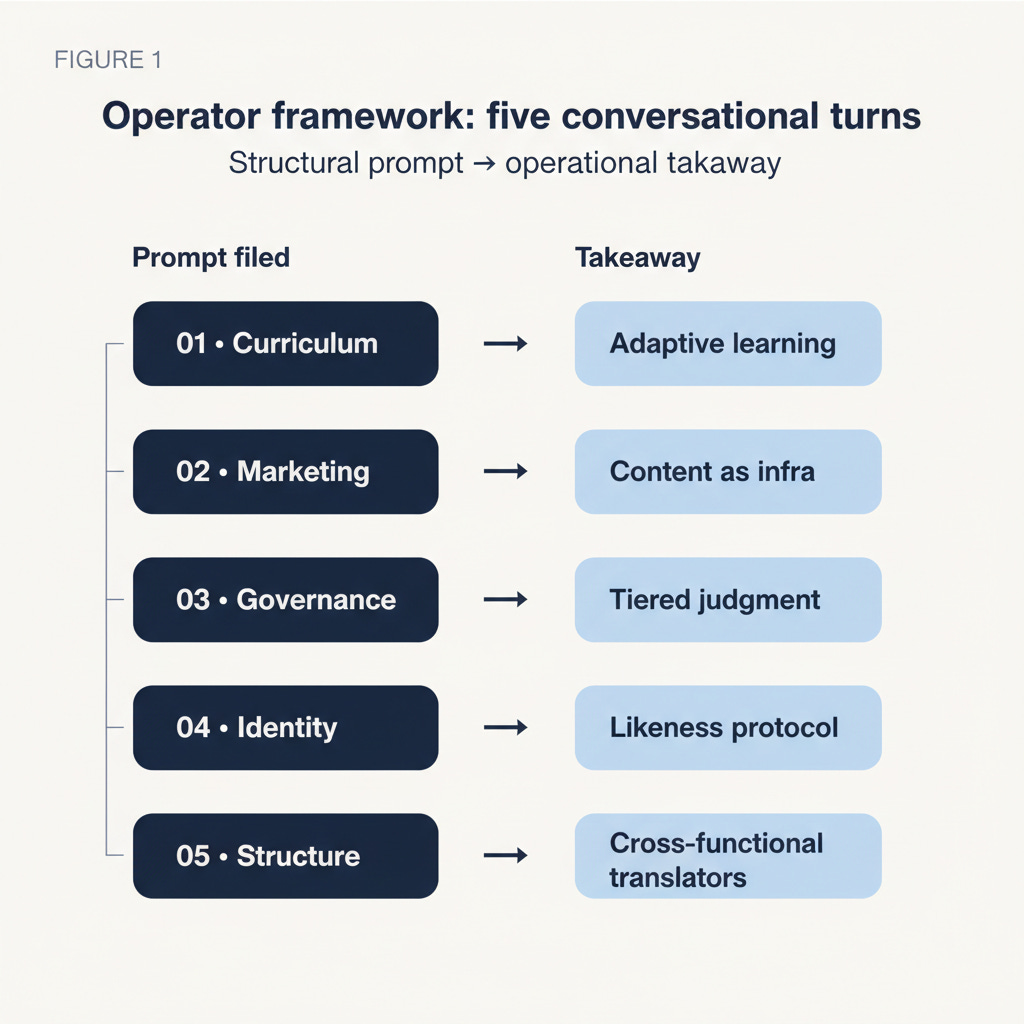
Figure 1: Operator framework — five conversational turns
Read each row left to right: the navy “prompt filed” is the structured question we used in the live Operator Chats session; the blue “takeaway” is the operating implication to install—curriculum as CI/CD, marketing as GEO infrastructure, tiered governance, likeness protocol, and translator roles. The table below names the friction each turn surfaced.
Turn: 01 · Prompt domain: Curriculum · Dynamic friction: Static vs. software speed · Operational takeaway: Adaptive learning systems
Turn: 02 · Prompt domain: Marketing · Dynamic friction: SEO decay vs. GEO engines · Operational takeaway: Content as context / infrastructure
Turn: 03 · Prompt domain: Governance · Dynamic friction: Rigid blanks vs. autonomy · Operational takeaway: Volume (AI) vs. judgment (human)
Turn: 04 · Prompt domain: Identity · Dynamic friction: Media utility vs. IP risk · Operational takeaway: Pre-emptive likeness protocols
Turn: 05 · Prompt domain: Structure · Dynamic friction: Functional silos · Operational takeaway: Cross-functional translators
01 — The Curriculum Problem
The structural prompt filed
Traditional business education relies on fixed variables: rigid credit-hour requirements, long-cycle textbook updates, deep departmental silos, and multi-year curriculum validation loops. Given that frontier AI models update their capabilities on a quarterly cadence, construct an operational diagnostic framework to identify where the friction between a static syllabus and dynamic software creates an educational delivery failure.
The reality on the ground
When you look at the structure of an academic institution, it mirrors an enterprise architecture. Changes to core course offerings traditionally require layers of committee approvals, accreditation reviews, and administrative sign-offs. This works well for stable environments where foundational principles—corporate finance, basic accounting—remain unchanged for decades.
However, Nathan highlighted a glaring adoption split within faculty networks. Some professors are moving natively with the technology—re-architecting assignments, teaching students how to prompt complex analysis engines, and examining the programmatic mechanics behind recommendation systems. Others are operating behind defensive lines, waiting for top-down institutional rules, uniform tool access, or a return to baseline certainty.
This split is not unique to academia. It is the exact internal friction playing out across corporate divisions. Some teams are proactively engineering custom workflows, while others treat AI like a glorified search bar or ignore it entirely due to cultural inertia.
Operator field note: Organizations and educational systems must pivot away from fixed, milestone-based training and move toward adaptive learning systems. If your internal onboarding or external curriculum takes twelve months to design and deploy, it is obsolete before it launches. The modern curriculum must function like an open codebase—subject to continuous integration and continuous deployment (CI/CD).
02 — The Marketing Problem
The structural prompt filed
We are witnessing a rapid architectural transition from standard keyword-driven Search Engine Optimization (SEO) to Generative Engine Optimization (GEO). Assume that an increasing volume of users now query Large Language Models directly to make B2B or consumer purchase decisions. Detail the data structures, indexing behaviors, and brand citations required to maintain visibility when algorithms act as the exclusive information intermediary.
The reality on the ground
This is an area where Nathan's active work hits the front lines. In his digital marketing curriculum at Gies, he teaches the direct mechanics of content design and GEO. The historical marketing question was clear: How do we engineer our metadata, keywords, and backlink profiles to rank on page one of a Google SERP?
The new operational question is entirely different: How does an AI agent synthesize, weigh, and cite our brand value when a user prompts it for a recommendation?
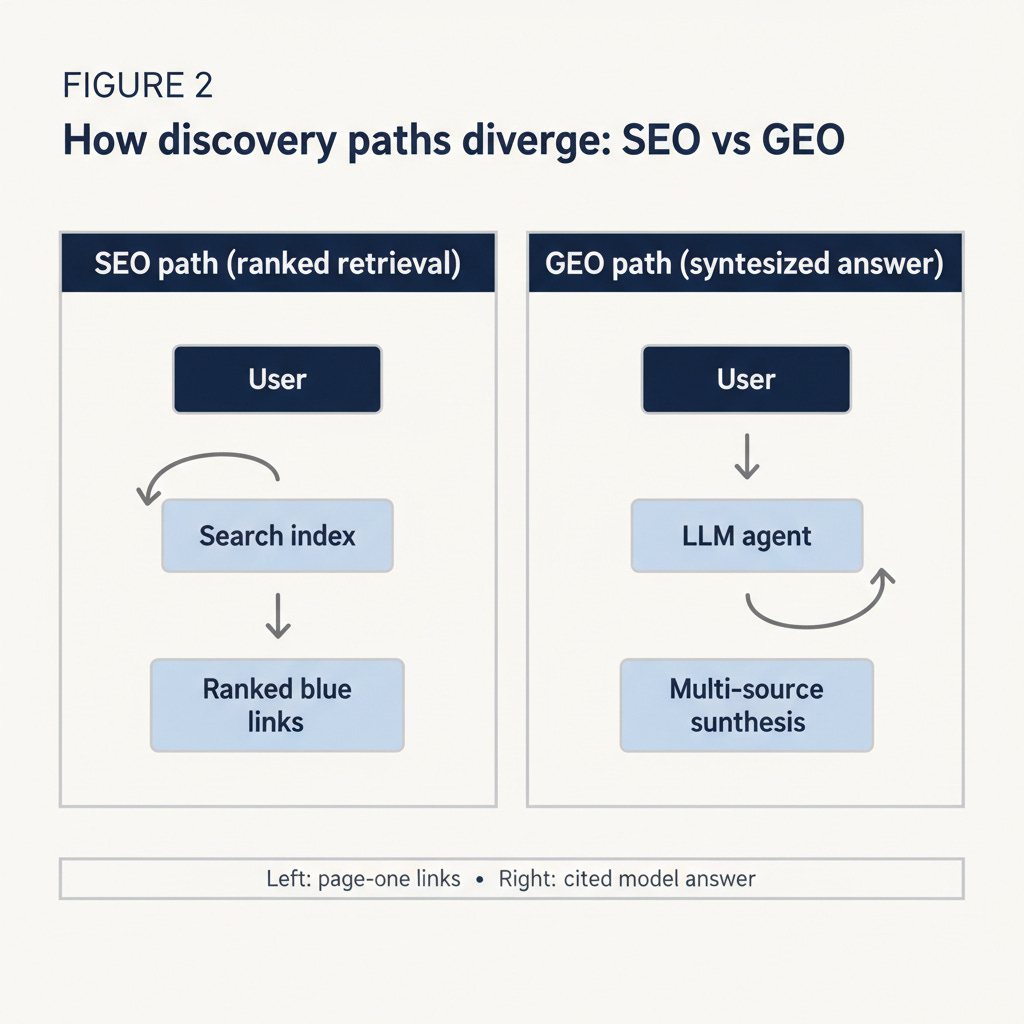
Figure 2: Discovery path comparison — SEO versus GEO
Left panel: classic retrieval—the user hits a search index and chooses among ranked links. Right panel: generative discovery—the user receives a synthesized answer with model-selected citations. Use this exhibit when auditing whether your brand is optimized for human SERPs only or for LLM intermediaries.
When an AI engine processes information, it is looking for distinct data parameters: structured markup, authoritative public documentation, contextual consistency across independent directories, and machine-readable text. If your company relies heavily on hyper-stylized landing pages or gate-kept PDFs that web crawlers cannot easily digest or contextualize, your brand is effectively invisible to an LLM-as-a-Judge system.
Operator field note: Your public-facing content is no longer just copy meant for human eyeballs; it is unstructured data infrastructure designed to feed AI knowledge graphs. Marketing teams must conduct rigorous audits by prompting frontier models to evaluate their brand against competitors. Analyze the source citations the models throw back. If the AI cannot accurately map your service offerings, your underlying web infrastructure requires structural clarity, not better ad copy.
03 — The Governance Problem
The structural prompt filed
Enterprise governance usually defaults to binary policy positions: absolute prohibition or unchecked autonomy. Map out a tiered governance matrix that explicitly delineates tasks based on risk boundaries, distinguishing between tasks that can be completely offloaded to autonomous agents and those requiring deterministic human checkpoints.
The reality on the ground
The governance trap is real. Organizations that draft heavy, fifty-page AI compliance handbooks find that the guidelines are completely antiquated by the time corporate counsel signs off on them. Conversely, companies that take a laissez-faire approach expose themselves to catastrophic hallucinations, data leaks, and code vulnerabilities.
Nathan and I dug into how to find a middle path. A vital operational realization surfaced during our discussion: AI is designed to handle volume; humans are engineered to scale judgment. When you look at modern operations, trying to review every single AI-generated output line-by-line defeats the economic and operational purpose of automation. It creates an unsustainable human bottleneck. Instead, governance must be built around risk-tiered escalation paths.
The tiered governance framework
Tier: Tier 1 — Low risk, full autonomy · Risk posture: High-volume, repeatable tasks with internal guardrails · Examples: Summarizing public industry reports, drafting internal meeting recaps, ad copy template variations
Tier: Tier 2 — Medium risk, asynchronous review · Risk posture: Tasks influencing external communication or internal database lookups · Examples: Initial customer service responses, code generation for non-critical tools; localized spot-checking
Tier: Tier 3 — High risk, deterministic human control · Risk posture: Strategic allocation, compliance sign-offs, institutional trust · Examples: Academic standing, final legal contracts, complex pricing modifications
04 — The Digital Identity Problem
The structural prompt filed
As generative voice synthesis and video cloning technology approach parity with physical reality, human identity is decoupling from physical presence. Define the administrative protocols, verification mechanisms, and security controls required to protect and monetize an executive's or educator's intellectual property and digital likeness.
The reality on the ground
This part of our talk moved from a standard tech discussion into something intensely practical. Nathan brought up the use of synthetic voice cloning for instructional video assets. In an online education environment, the utility is massive. If a specific dataset updates or a business case study changes over the weekend, a professor should not have to book a recording studio, set up lighting rigs, and spend hours re-recording an entire lecture module. They should be able to alter the underlying text script and programmatically update the video layer.
But this optimization exposes an existential risk. Once an operator's voice, physical likeness, and specialized expertise are decoupled from their biological self, that identity becomes a high-value digital asset.
This asset requires rigorous protection. Who holds the encryption keys to that voice model? What are the access control protocols for rendering new media? If a synthetic lecture goes live with an error, who inherits the legal accountability?
Operator field note: Do not wait for a security incident or an intellectual property dispute to think about this. If your organization leverages or plans to use synthetic media, synthetic voices, or localized avatars, you must draft a formal likeness protocol immediately. This document must clearly address ownership rights, storage parameters, multi-factor execution approvals, and watermarking criteria before deployment.
05 — The Silo Problem
The structural prompt filed
Organizational structures and academic departments have historically operated as isolated silos (e.g., Marketing, Data Analytics, Cybersecurity, Corporate Strategy). Given that AI systems intrinsically connect data inputs directly to execution layers, outline how organizational design must change to support cross-functional fluency.
The reality on the ground
The traditional corporate structure organizes people by functional specialties. Marketers sit with marketers, data scientists live in their analytics environment, and security teams guard the perimeter from afar.
Nathan's academic background sits precisely at the intersection of these domains. His published work spans behavioral analytics, retail strategy, and platforms where creators train their AI substitutes—research on AI substitutes and multi-objective choice environments that explains why departmental silos fail when execution layers consume the same data pipelines.
AI workflows inherently collapse these walls. A generative marketing execution engine cannot function without direct, programmatic access to real-time customer data pipelines. Those data pipelines cannot run safely without strict information-security controls. Corporate strategy is now bound to the technical limitations and speed of your data infrastructure.
The ultimate operational advantage does not belong exclusively to the deepest machine learning engineer, nor does it belong to the traditional high-level strategist. It belongs to the translators.
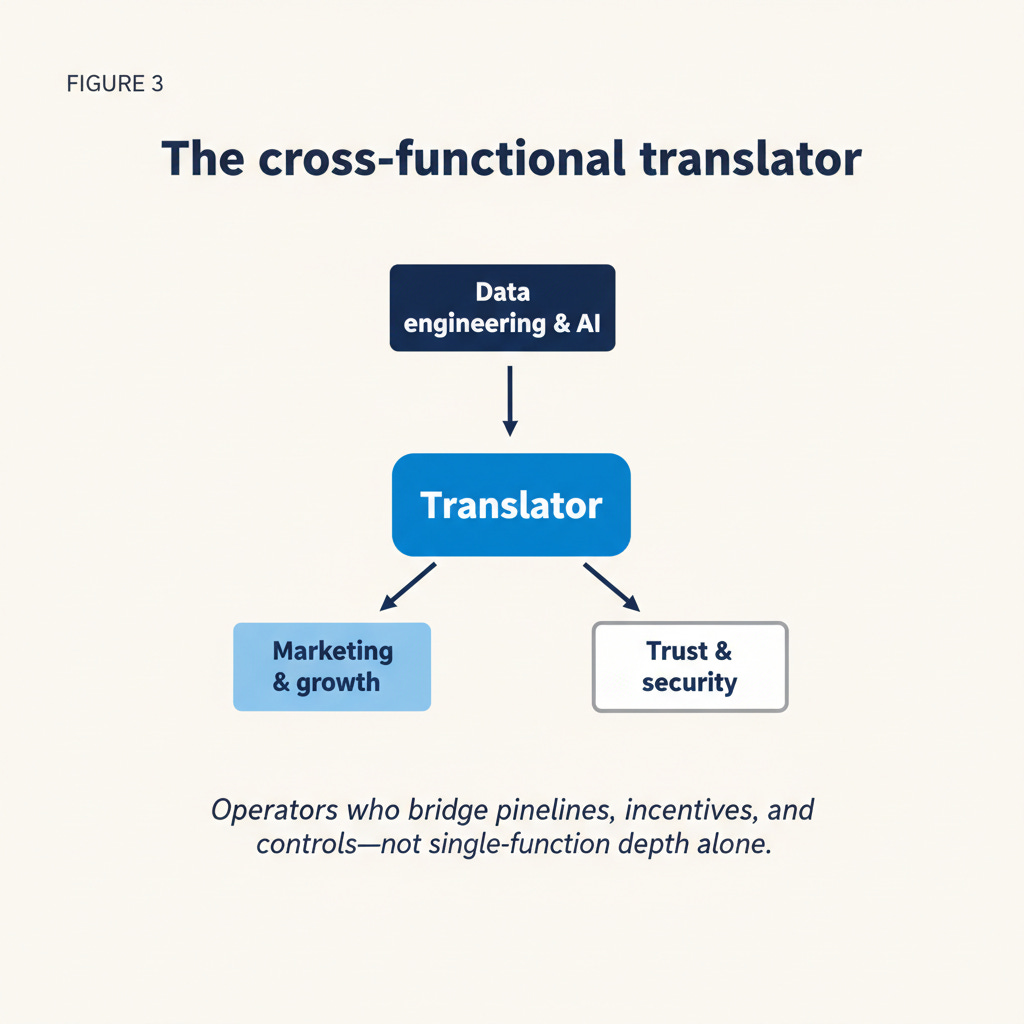
Figure 3: Cross-functional translator hub
When AI connects data pipelines directly to execution, advantage accrues to operators who can read engineering constraints, commercial incentives, and trust boundaries in one motion—the “translator” at the center of this hub, not the deepest specialist in a single silo.
Operator field note: The translator is an operator who can sit comfortably between technical execution, market incentives, and governance constraints. They possess enough technical literacy to understand how data moves through an LLM pipeline, enough marketing acumen to understand customer behavior, and enough risk awareness to spot security vulnerabilities. Build hiring and internal cross-training models around cultivating these cross-functional translators.
The Core Pattern: Building Systems, Not Just Tools
When we stepped back to look at all five turns of our conversation, a larger, systemic pattern emerged.
Our dialogue started as an exploration of how AI changes classroom dynamics. It concluded with a much bigger challenge: How do organizations redesign their entire infrastructure when knowledge, operational work, and brand trust are all becoming programmable?
This is why business education—and corporate strategy at large—is beginning to look less like a static collection of processes and more like an interconnected operating system. It is not because every professional needs to become a full-stack developer or an algorithmic researcher. It is because every single operator will have to think, build, and execute in systems.
The real challenge exposed by the current adoption split is not a limitation of the technology itself. It is a human management challenge. Every enterprise, university, and startup now has a mixed population: native builders, casual users, quiet skeptics, and team members waiting for explicit policy permissions.
The real opportunity here is not to recklessly automate every human touchpoint. The goal is to build highly adaptive operational systems where AI safely handles the sheer scale of execution volume, while humans remain squarely responsible for the strategic decisions that matter.
About Operator Chats
Operator Chats is a monthly live conversation series from The AI Operator. We skip high-level theoretical talk to sit down with builders, researchers, and enterprise operators—including guests like Professor Nathan Yang—and unpack exactly how AI systems are changing everyday strategy, organizational design, and workflows.
Catch the next drop: Subscribe to The AI Operator on LinkedIn for monthly field notes and deep dives.
Engage: Join the conversation on our LinkedIn channel. How is your organization updating its internal operating system to handle the speed of software?
Transparency note: This editorial deep dive is compiled from the live Operator Chats session with Professor Nathan Yang (approximately thirty minutes). The content has been organized, expanded, and structured for editorial depth and readability. Conceptual takeaways and framework interpretations reflect the operational views of The AI Operator.
Editorial transparency. Essays at The AI Operator may use AI-assisted research, drafting, and editing tools under staff editorial review. Facts, figures, and recommendations are checked before publication; we correct the record when evidence changes. Questions: hello@theaioperator.net.
Published on [Substack](https://theaioperator.net/p/business-education-ai-operating-system).