

Executive Summary
Ambient AI — tools that listen to a visit (with permission) and draft the clinical note — and status-support scoring are already clearing chart admin on Jeff Bohmer’s emergency department (ED) shift—so clinicians can stay at the bedside and finish sooner. Adoption is strong but uneven; the real gates are a named human edit before anything is final, and a slow application-review path that favors the electronic health record (EHR) platform—the hospital’s digital chart—over overlapping vendors. Near-term gains sit in order packaging, consult handoffs, imaging queues, and patient timelines—not robot doctors.
The Opening Scene
In Jeff Bohmer’s emergency department, the keyboard used to compete with the patient. You finished with room three, moved on, and by room six the details were already thinning. Charting pulled eyes to a screen. Status fights, imaging waitlists, and after-hours notes stacked on top of the clinical work.
That is where we started Operator Chats Edition 03—a twenty-five-minute live session with Jeff Bohmer, an emergency physician and physician executive at Northwestern Medicine whose remit includes emergency management and how patients move through the hospital [1].
Jeff did not pitch a future of robot doctors. He walked through what is already live on his shift: tools that scour the digital chart to help case managers get admission status right, ambient listening that drafts the note while he talks, evidence apps for on-the-fly questions, and a hospital approval process that can take more than a year before a vendor ever reaches a patient.
His through-line was practical. AI is clearing admin. A well-organized draft can occasionally help a tired overnight clinician reconsider a detail from the encounter—but every diagnostic and treatment decision still belongs to the clinician who reviews the note. And nothing is final until a human edits.
If AI takes the paperwork, what does that free—and what should still stay owned?
We used five prompts to stay on that question. What follows is field notes from the conversation, not a product tour.
About the guest
Jeff Bohmer is Associate Chief Medical Officer at Northwestern Medicine Central DuPage Hospital and Medical Director of Emergency Management for Northwestern Medicine’s health network. He continues to practice emergency medicine. He has completed Emory’s Chief Medical Officer Program and is pursuing an MBA through the Gies College of Business at the University of Illinois Urbana-Champaign. LinkedIn
Views expressed are Jeff’s personal opinions and do not represent Northwestern Medicine or any affiliated employer.
The Operator Framework: Five Conversational Turns
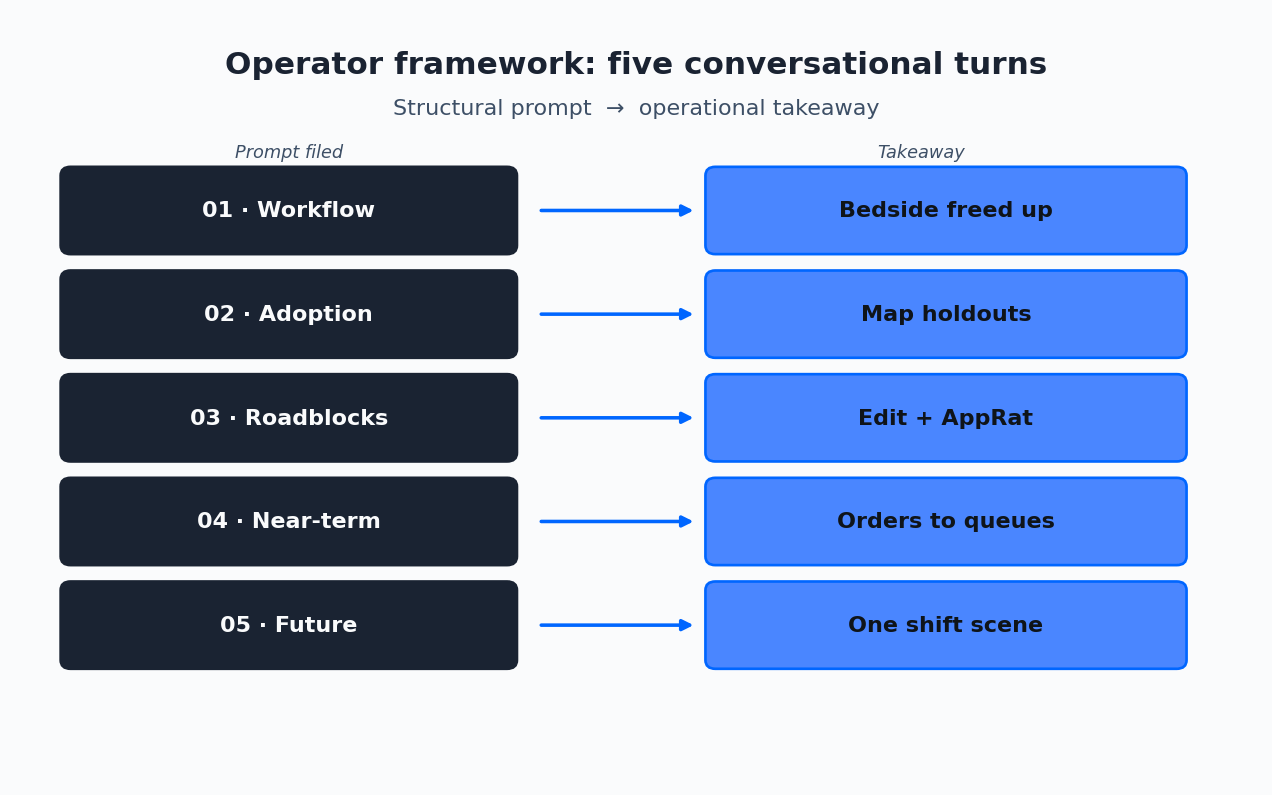
Figure 1: Five themes from the Jeff Bohmer session
Turn: 01 · Theme: Workflow · What came up: Status scores + ambient notes clear chart load · What to try: Measure what the tool frees at the bedside
Turn: 02 · Theme: Adoption · What came up: High use—and real hesitation by role · What to try: Map champions vs holdouts without shaming
Turn: 03 · Theme: Roadblocks · What came up: Accuracy fear, liability, slow approvals · What to try: Edit gate + named problem before any vendor
Turn: 04 · Theme: Near-term gains · What came up: Orders, handoffs, imaging, patient timelines · What to try: Pick one path with a clinician review hop
Turn: 05 · Theme: Future sketch · What came up: Synergy across data the hospital already has · What to try: Describe one shift, not a transformation slide
01 — What Changed on the Shift
The question we asked: How has AI changed the way you work—especially admin like charting and status decisions—and what does that free you up to focus on?
You might recognize this if… documentation still steals the minutes you meant for the person in front of you.
Jeff started with hospital operations, not a chatbot. A product from Xsolis reads Epic—the electronic health record, the hospital’s digital chart—and produces a Care Level Score: a data-driven indicator used to support medical-necessity review and inpatient-versus-observation status decisions [1][2]. Case managers use that signal to get status right early. Status decisions can affect reimbursement, coverage rules, and—in some circumstances—the patient’s financial responsibility. Jeff oversees throughput—how patients move through the hospital—and he called this one of the biggest wins so far. The pilot at his hospital is expanding to sister sites [1].
Post-acute placement—whether a patient needs skilled nursing, acute rehab, home health, or home with no extra help—is a separate operational question from the Care Level Score’s status signal. He has wanted Care Logistics for navigating patients across intensive care, step-down, and general floors, but the price stopped them. Instead they lean on Epic’s built-in dashboards and discharge milestones [1][3].
At the bedside, Abridge changed the feel of the shift [1][4]. With patient permission, it listens to the conversation—and to Jeff dictating the exam and plan—and builds a full history, physical, and medical decision-making note. He can see five or six patients without rebuilding the chart from memory. He can look the patient and family in the eye. He gets out of shifts earlier because he is not charting as much. Older dictation, he said, often shrinks the story to bare bones. Ambient listening keeps the patient’s story without drowning in redundancy.
By organizing the clinical history and drafting the medical decision-making section, the tool can occasionally prompt him to reconsider a detail or diagnosis discussed during the encounter. The clinician must still review the note, determine whether the suggestion is clinically relevant, and make every diagnostic and treatment decision [1].
For consent, he keeps the pitch plain: this puts your details on the chart more accurately so the next caregiver understands and you do not have to repeat yourself. About two patients out of roughly seven hundred declined [1].
Your takeaway: Evaluate ambient AI by the time and attention it returns to the bedside, the completeness of the documentation, and the reliability of its drafts—not only by minutes saved.
Next up: Who on the team is actually using these tools?
02 — Who Adopts, Who Holds Back
The question we asked: How is AI landing across roles on the team—what’s the adoption pattern, and where does hesitation still show up?
You might recognize this if… a few people live in the new stack while others never open it.
Jeff’s working set spans a few jobs at once:
Status support and case management (Care Level Score for medical-necessity / inpatient-vs-observation review)
In-hospital flow (Epic dashboards; Care Logistics still aspirational)
Ambient documentation (Abridge)
Point-of-care evidence (OpenEvidence and Doximity’s AI assistant) [1][5]
Adoption figures, as estimates from his observations rather than formally validated institutional data: roughly 85% for ambient listening in that product’s rollout; closer to 70% for evidence tools among physicians in the department. Some clinicians remain more comfortable with established workflows or want additional evidence before changing their practice. The department, he said, is fairly progressive—and still not uniform [1].
The fear underneath is familiar: will this take my job? Radiology is likely to see substantial workflow change, particularly through prioritization, preliminary image analysis, and support for high-volume studies. The timing and workforce implications remain uncertain. Emergency medicine is harder to automate near term because it is hands-on. Efficiency could still change how many people you need on a roster later. “We’re not there yet,” he said [1].
Your takeaway: Publish what the tool will not replace. Adoption without that story breeds quiet refusal.
Next up: What still blocks a careful rollout?
03 — Skepticism, Liability, and the Approval Gauntlet
The question we asked: What’s the biggest roadblock when implementing AI—and how do you stay discerning about what you trust versus what you edit?
You might recognize this if… the demo looked great and the floor still does not trust it.
Jeff’s biggest roadblock was not budget. It was skepticism that the system will give accurate data every time. It will not. With Abridge, the chart is editable. In his experience, the drafts are generally quite complete, although accents, mumbled words, and room noise can still create errors that require human review [1].
Then comes the liability edge. If AI-generated language lands in the note for something the clinician never truly considered, and the patient has a bad outcome, could that create ambiguity about what the clinician actually considered? That fear is why discernment matters—what you accept, what you delete, what you follow up.
Northwestern Medicine’s application-review process—sometimes referred to as AppRat, short for application review—asks the practical questions: What problem are you solving? Can Epic do it already? Does this third party overlap another tool? Jeff has chased products for over a year and a half that still are not live. Implementation is slow. Once tools land, he said, they tend to show their return [1][3].
He is not IT. He is a problem-solver who starts the process when he sees a gap technology could close—sometimes after meeting vendors at conferences like Millennium Alliance, then spending months on diligence [1].
Your takeaway: No AI chart content without an edit gate. No third-party tool without a named problem and an overlap check.
Next up: Where does he want the next gains?
04 — What He Wants Next
The question we asked: Where can AI improve healthcare next—and how would you recommend teams use it to get there?
You might recognize this if… the note got easier but the clicks, phone calls, and waitlists did not.
Jeff’s near-term list came from the floor:
Package the visit. Ambient tools should help assemble orders and imaging—not only the note—saving maybe five to ten minutes of manual work per patient as they mature [1].
Shorten the consult call. Today a specialist still gets the classic phone presentation from medical school. Tomorrow, Epic could send bullet points—why we are consulting, why we are admitting—with “call me with questions” [1][3].
Speed imaging. Speculatively, he sketched AI first-pass reads (“wet reads”) for regular X-rays on a nearer horizon, with CT, MRI, and ultrasound support further out—timelines he treated as guesses, not forecasts. Radiology workflow is already under pressure: radiologists get backlogged; sicker patients with denser studies make that worse [1].
Connect the timeline. Epic can pull records from other Epic sites, but they do not yet feel like one story. A patient with five hospital visits and four clinic stops in a year still requires a clinician to stitch the plot. AI summaries of the last six to twelve months would make care safer [1][3].
Rank the imaging queue by risk, not only wait time. Code stroke, code aorta, and code trauma already jump the line. Other high-risk patients can still wait two hours. He sees an opportunity for future Epic-based tools to weigh vital signs, chief complaint, laboratory results, past history and medications to help identify high-risk patients who may need to move forward in the imaging queue [1].
Your takeaway: Improve the path from conversation → orders → handoff → imaging priority → longitudinal story. Keep a clinician review on every hop.
Next up: If that lands, what does care feel like?
05 — Paint the Picture
The question we asked: If you could speculate freely: what does the future of healthcare look like when AI actually works—paint the picture?
You might recognize this if… every deck says “transformational” and none describe Tuesday night.
Jeff’s picture was concrete. You talk to the patient; the system catches the story. Status gets cleaner signals without removing ownership. Consults travel as short summaries. Imaging returns usable first reads in small increments of time. The chart stops being a pile of pullable-but-unconnected encounters. Quiet high-risk patients move up the queue even without an overhead code.
Safer care, as he framed it, is synergy—the hospital’s existing data finally arranged so a tired overnight clinician can see what has happened without losing the thread [1].
Your takeaway: Speculative futures should sound like one shift. One patient. One bottleneck removed. One person who still signs.
What Held Across the Conversation
Jeff’s session was not about replacing emergency physicians. It was about clearing chart noise, sharpening status and flow, and keeping a human edit gate when tools get clever enough to put language in the record you did not fully mean.
Two constraints show up together. First: trust. Ambient notes only work if clinicians believe they can correct them—and that unreviewed AI language will not create ambiguity about what they actually considered. Second: time-to-live inside a health system. A strong vendor demo can still sit eighteen months in application review while teams ask whether Epic already covers the gap [1].
That is the operator lesson beyond healthcare. Volume can move to machines. Ambiguity, liability, and final meaning stay human—and procurement can be as hard as the model.
What changes Monday morning
List the admin that still steals presence. Notes, status fights, order clicks—what could a reviewed AI draft take?
Map adoption by role. Who uses ambient notes and evidence tools—and who never will without a different pitch?
Write the edit rule. Nothing final in the chart without a named human pass.
Ask the platform first. Can your electronic health record solve it before you add another vendor?
Describe one future shift scene. Imaging wait, consult handoff, or overnight decision support—then reverse-engineer the workflow.
The operators who get this right will not be the ones with the longest vendor list. They will be the ones who know what the tool may draft—and what a clinician still has to mean.
Glossary
Ambient listening — AI that listens to a visit (with permission) and drafts the clinical note
Care Level Score — A data-driven indicator used to support medical-necessity review and inpatient-versus-observation status decisions
Electronic health record (EHR) — The hospital’s digital chart system (Epic is Jeff’s)
Inpatient vs observation — Full hospital admission vs a shorter “watch and decide” status—different reimbursement and coverage rules
Throughput — How patients move through beds, tests, and discharge
Wet read — A quick first-pass read of an imaging study before the full formal report
AppRat — Short for application review; Northwestern Medicine’s application-review process (problem, in-house option, overlap check)
References
[1] Jeff Bohmer, Operator Chats live session (July 26, 2026). Guest field notes on clinical AI workflow, utilization, ambient documentation, and future imaging and chart synergy. Personal views only. Guest review refinements incorporated August 2026.
[2] Xsolis. (2026). Care Level Score and utilization management. https://www.xsolis.com/
[3] Epic Systems. (2026). Software and clinical systems. https://www.epic.com/software/
[4] Abridge. (2026). Ambient AI for clinical conversations. https://www.abridge.com/
[5] OpenEvidence. (2026). AI medical information platform. https://www.openevidence.com/
[6] Care Logistics. (2026). Hospital patient flow and care coordination. https://www.carelogistics.com/
[7] The AI Operator. (2026). Operator Chats program overview. https://www.theaioperator.net
About Operator Chats
Operator Chats is a monthly live conversation series from The AI Operator. We sit down with builders and operators—and unpack how AI is changing strategy, workflows, and how teams actually work.
Catch the next drop: Subscribe to The AI Operator for monthly field notes and deep dives.
Engage: Where has AI cleared admin work on your floor—and what judgment did you refuse to outsource?
Transparency note: This editorial deep dive is compiled from the live Operator Chats session with Jeff Bohmer (approximately twenty-five minutes, July 26, 2026), with guest-requested clarifications incorporated after review. The content has been organized for readability. Views attributed to the guest are his personal opinions and do not represent Northwestern Medicine or any affiliated employer. Product names (including Xsolis / Care Level Score) are editorial clarifications of tools described in the session.
Editorial transparency. Essays at The AI Operator may use AI-assisted research, drafting, and editing tools under staff editorial review. Facts, figures, and recommendations are checked before publication; we correct the record when evidence changes. Questions: hello@theaioperator.net.
Published on [Substack](https://theaioperator.net/p/ai-cleared-the-chart-judgment-owns-shift).